SAFE Unveils Package of Capital Account FX Management Reforms to Broaden Cross-Border Investment and Financing Space for Enterprises
A package of measures to optimize capital account foreign exchange management has landed. On October 23, the State Administration of Foreign Exchange (SAFE) released the draft "Notice on Further Optim
A package of measures to optimize capital account foreign exchange management has landed. On October 23, the State Administration of Foreign Exchange (SAFE) released the draft "Notice on Further Optimizing the Facilitation of Cross-Border Investment and Financing Policies" for public comment. Covering investment, financing and streamlined FX registration, the notice involves three major categories and 11 facilitation measures, reflecting the orientation of deepening FX management reform, expanding opening-up, and attracting and stabilizing capital.
Zhu Hexin, Administrator of SAFE, recently announced at the opening ceremony of the 2026 Financial Street Forum annual meeting that a package of policies to optimize capital account FX management would be introduced to better meet enterprises' cross-border investment, financing and capital allocation needs, serve both "bringing in" and "going out," and expand two-way investment and cooperation space.
Easier for funds to "come in" and "go out"
"In earlier field research in many regions, SAFE collected opinions and suggestions from banks and enterprises on foreign direct investment, cross-border financing, FX registration and other FX business matters," an official from a relevant SAFE department told Yicai. The notice was formed on the basis of that research, with many measures problem-oriented and responsive to the demands of market entities. Once implemented, it will resolve most of the difficulties enterprises have reported.
Facilitation policies on direct investment cover four items: making it easier to directly convert and pay capital account income, facilitating the remittance of standby funds for outbound direct investment, simplifying review materials for outbound direct investment fund remittances, and optimizing such reviews. The highlights can be summed up as higher quotas and simpler materials.
For example, a single institution may currently pay no more than the equivalent of US$200,000 per month in standby funds from capital account income. Under the notice, the amount that can be directly converted and paid from capital account income is raised to no more than the equivalent of US$500,000 per month, which will further improve the efficiency of foreign investment and help attract and utilize foreign capital.
In another example, to facilitate remitting outbound direct investment funds for daily small operating expenses of overseas enterprises — such as rent, utilities, personnel, office costs, transport, taxes and petty procurement — the notice specifies that domestic institutions may remit funds for such purposes within prescribed quotas after submitting a purpose commitment letter, further facilitating overseas operations.
Notably, while easing standby fund remittances for outbound investment, SAFE is also guarding against risks. The notice requires that standby fund remittances for overseas investment not exceed the equivalent of US$200,000 per month, and cumulatively no more than 10% of the institution's registered outbound direct investment remittance quota. Those who use standby funds contrary to the committed purpose will be investigated and dealt with according to law.
In addition, some enterprises' overseas investment projects are subject to pre-verification of funds, and some overseas engineering projects and equipment procurement require "verifying funds before signing contracts," leaving enterprises unable to obtain proof of fund use in advance. The notice makes clear that domestic institutions may process fund remittances first with materials other than authenticity proof of fund use, plus a fund usage plan and a commitment letter to supply supplementary materials, and must complete the relevant materials within the commitment period or before the next remittance, whichever comes first.
The SAFE official said the policy helps solve these "pain point" and "bottleneck" problems, will greatly meet the foreign exchange needs of overseas enterprises facing such special difficulties, and ensures the normal operation of overseas-invested enterprises.
Cross-border financing opens at a high level
Expanding cross-border financing at a high level — that is, optimizing debt financing — involves four items.
A major highlight is the further expansion of the scope of entities eligible for cross-border financing facilitation. The policy will benefit technology companies including innovative small and medium-sized enterprises, manufacturing "single champion" enterprises, science and technology reform demonstration enterprises, (national) enterprise technology centers, enterprises in the smart factory gradient cultivation system (advanced level and above), and laboratories on the Ministry of Agriculture and Rural Affairs' key list. They may borrow foreign debt within a quota of up to the equivalent of US$10 million, while eligible enterprises under the "innovation points system" may borrow up to the equivalent of US$20 million.
The notice also specifies that under the macro-prudential management model, for eligible foreign-invested enterprises borrowing foreign debt from overseas related enterprises, the category risk conversion factor is lowered from 1 to 0.5. This reduces the occupation of the foreign debt quota by related-party borrowing, enlarging the room for such borrowing without raising the overall macro-prudential cross-border financing quota cap.
The notice further proposes rolling out the green foreign debt policy nationwide — enlarging the borrowing room for cross-border financing by enterprises carrying out green development or low-carbon transition projects, in support of the national green and low-carbon development strategy — and extending nationwide the sharing of foreign debt quotas between financing leasing parent and subsidiary companies: under the macro-prudential model, when a leasing subsidiary's own quota is insufficient, it may use the parent company's unused quota, further facilitating quota sharing in the leasing industry.
Optimization of capital account business registration covers three items, all aimed at cutting enterprises' time and "shoe-leather" costs. At present, domestic enterprises must handle outbound direct investment registration at banks within the jurisdiction of their local SAFE office. Under the notice, the scope of banks where enterprises can register FX for overseas investment is expanded to banks in other cities within the same provincial SAFE branch's jurisdiction, greatly facilitating enterprises operating across regions.
(Source: Yicai / First Financial)
Related Articles

RMB Exchange Rate Extends Two-Way Volatility as Market Pricing and Policy Transparency Keep Improving
Onshore Yuan Closes at 6.7817 Against Dollar, Down 33 Pips

Hong Kong Dollar Stablecoin Launch 2026: HKMA Issues First Licenses to HSBC & Anchor
Japan Finance Minister Katayama: Ready to Act on Currency Volatility When Necessary
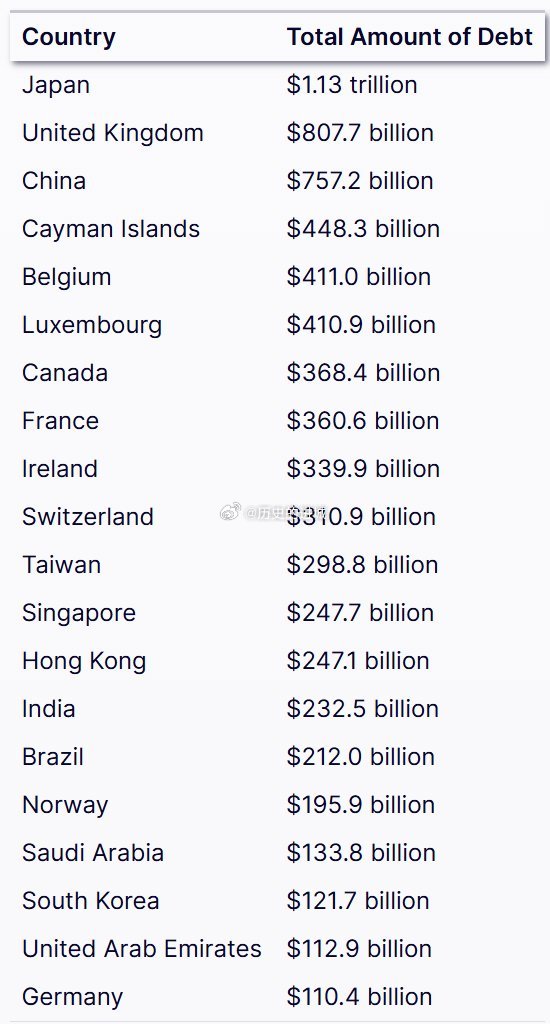
As of April 2025, the top three foreign holders of U.S. Treasury bonds are Japan, the United Kingdom, and China