RMB Exchange Rate Extends Two-Way Volatility as Market Pricing and Policy Transparency Keep Improving
On October 16, the onshore and offshore RMB exchange rates both moved higher against the US dollar and the central parity rate continued to strengthen, with market flexibility becoming more evident. E
On October 16, the onshore and offshore RMB exchange rates both moved higher against the US dollar and the central parity rate continued to strengthen, with market flexibility becoming more evident. Experts believe that exports' sensitivity to exchange-rate fluctuations has declined, with factors such as industrial competitiveness and market diversification offsetting the impact. Looking ahead, the forces shaping the exchange rate are diverse; the RMB is expected to maintain a two-way volatility pattern, while policy will strengthen expectations guidance and keep the exchange rate basically stable at a reasonable and balanced level.
Central parity flexibility increases markedly
On October 16, the RMB edged higher against the dollar. Wind data showed that the onshore rate closed at 6.6868 per dollar at 16:30, up 48 basis points from the previous trading day and 53 basis points for the week. As of 16:30, the offshore rate stood at 6.6866, up 28 basis points on the day.
The central parity rate kept strengthening. Data from the China Foreign Exchange Trade System showed that the fixing was set at 6.7220 on October 16, 33 basis points stronger than the previous trading day and 110 basis points stronger over the week.
Li Liuyang, chief FX analyst at CICC Research, said the flexibility of the fixing has increased markedly this year, with annualized volatility rising to 1.2% from 0.8% in 2025. Monthly adjustments have varied in pace but moved in the same direction as the spot rate, indicating that the fixing mainly references market supply and demand.
How does RMB appreciation affect exports? "RMB appreciation and strong export growth are currently coexisting, and exports' sensitivity to the exchange rate has fallen significantly," said Zhang Wei, chief macro analyst at Caitong Securities Research Institute, attributing this to systemic changes in the exchange-rate formation mechanism, the balance-of-payments structure and industrial competitiveness.
Zhang said industrial advantages have driven a structural shift in export goods, with non-price competitiveness now dominant and the exchange rate only a secondary factor. Diversified export markets have reduced reliance on the US market and offset the impact of nominal exchange-rate swings. Accelerating RMB internationalization has sharply reduced the effect of currency fluctuations. In addition, companies now have more tools to smooth the impact of currency moves and no longer need to raise prices passively.
Market to play a decisive role
The Monetary Policy Committee of the People's Bank of China proposed at its regular meeting for the third quarter of 2026 that China will uphold the decisive role of the market in exchange-rate formation, enhance the resilience of the foreign exchange market, stabilize market expectations, guard against the "herd effect" and self-reinforcing irrational expectations, and keep the RMB exchange rate basically stable at a reasonable and balanced level.
Ming Ming, chief economist at CITIC Securities, said the recently released "Policy Stance of the People's Bank of China on the RMB Exchange Rate" reaffirmed that China has long maintained a managed floating exchange rate regime based on market supply and demand and adjusted with reference to a basket of currencies. Its core orientation is to let the market play a decisive role in exchange-rate formation while setting clear bottom lines: when the exchange rate sees short-term disorderly overshooting and triggers procyclical herd behavior, macroprudential tools and other means will be used to stabilize market expectations and prevent short-term overshooting.
In Li Liuyang's view, the existing exchange-rate policy will continue, with market-based pricing and macroprudential management working in tandem. The central bank does not preset an exchange-rate level and focuses on preventing sharp short-term swings. It can be expected that the degree of marketization and policy transparency of the RMB exchange rate will continue to improve.
"The RMB exchange rate will be determined more by market supply and demand, rather than being actively adjusted as a policy tool for rebalancing," Li said.
Multiple factors shaping the exchange rate
Looking ahead, experts say multiple factors affect the RMB exchange rate, with forces driving both appreciation and depreciation present, and the direction still uncertain.
"China's economic fundamentals are solid, the balance of payments is expected to remain broadly balanced on its own, and the cross-border use of the RMB keeps increasing, providing strong support for medium- and long-term exchange-rate stability. But the influencing factors are diverse, with forces for both appreciation and depreciation persisting, so the future path remains uncertain," said Wen Bin, chief economist at China Minsheng Bank.
Liu Meng, an analyst at China Construction Bank's financial markets department, said the RMB will continue to trade in two-way volatility with the dollar and remain modestly firm within the year. For the fourth quarter, attention should be paid to potential changes in seasonal settlement demand, the potential impact of a widening China-US interest rate differential on trading behavior, and potential policy developments.
Li Liuyang said the RMB is expected to show modest strengthening, a slower pace of appreciation and increased two-way volatility next year. "If exports continue to perform well and the dollar gradually retreats from its highs, the RMB is still likely to appreciate modestly. If the dollar keeps rising and external shocks intensify, the RMB exchange rate may also see a periodic pullback," he said.
(Source: China Securities Journal)
Related Articles

Digital RMB Operating Institutions Expand to 30 with Eight New Banks
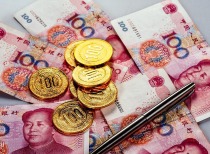
Seizing Opportunities in RMB Internationalization Banks Enhance Cross-Border Service Capabilities
At the end of February 2025, the balance of domestic and foreign currency deposits stood at 317.66 trillion yuan, representing a year-on-year increase of 7.1%
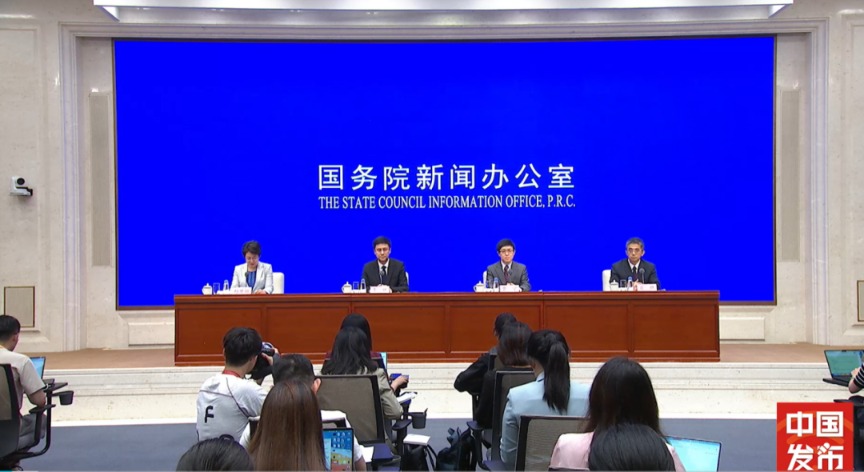
Authoritative Interpretation of Seven Key Points in the 15th Five-Year Plan Proposal: Accelerating the Development of a Financial Powerhouse
At the end of May 2025, the balance of domestic and foreign currency deposits stood at 324.08 trillion yuan, representing an 8.3% year-on-year increase