PBOC to Run Overnight Reverse Repos for Nine Consecutive Working Days as Liquidity Management Turns More Precise and Flexible
On October 20, the People's Bank of China published an open market operations announcement stating that, to better match the short-term liquidity needs of the banking system, it will conduct overnight
On October 20, the People's Bank of China published an open market operations announcement stating that, to better match the short-term liquidity needs of the banking system, it will conduct overnight reverse repo operations from October 21 to November 2, using fixed-rate, quantity-tender auctions with a daily operation volume capped at RMB 1 trillion.
Wang Qing, chief macroeconomic analyst at Orient Golden Credit, told Securities Daily that the National Day holiday delayed October's tax period, which now overlaps with month-end, explaining the marked increase in the number of consecutive overnight reverse repo operations announced this time. He added that keeping the daily cap at RMB 1 trillion can fully meet financial institutions' relatively large short-term funding needs amid the overlapping tax-period and month-end factors, guiding the short-end money market rate DR001 to run steadily around the policy rate and more effectively containing its volatility.
Industry experts said the PBOC's liquidity management has become more precise and flexible. Overnight operations can flexibly inject and promptly withdraw funds in line with changes in supply and demand, precisely offsetting short-term disturbances; combined with instruments such as seven-day reverse repos, they help form a tool mix with better-matched tenors and more precise adjustment, better safeguarding stable money market operation.
On June 17 this year, PBOC Governor Pan Gongsheng said at the 2026 Lujiazui Forum that the central bank would "further enrich the open market operations toolbox and add overnight reverse repo instruments in due course to better match the short-term liquidity needs of the banking system." At the end of June, the PBOC launched its first overnight reverse repo operations, effectively easing short-term liquidity swings across the quarter-end.
Since then, the PBOC has gradually increased the frequency of operations. At the end of July it established a "3+1" model — three days of operations at month-end and one day at the start of the month — easing the concentrated maturity pressure early in the month. In August it added operations around the tax period, effectively addressing another important point of liquidity fluctuation. As a result, the number of overnight operation days per month rose step by step from 2 to 4 and then to 8. Operation volumes also expanded steadily, from no more than RMB 300 billion and RMB 600 billion to RMB 1 trillion.
Market participants see this arrangement as both helping financial institutions become familiar with overnight liquidity management and improving the central bank's ability to regulate through overnight operations. Overnight reverse repos have gradually become an important tool for the PBOC in responding to changes in short-term funding supply and demand.
In a keynote speech at the 2026 Financial Street Forum annual meeting, Pan Gongsheng noted that, as things stand, the interbank overnight repo rate has in practice become the target rate for PBOC monetary policy operations, yet the main instrument of the PBOC's open market operations and its main policy rate still have a seven-day tenor — the two are not fully aligned. To further improve the precision of interest rate regulation, the PBOC will study switching the tenor of its main open market operations instrument to overnight at an appropriate time, and the open market overnight repo rate will accordingly become the main policy rate.
"Matching the tenor of overnight operations with the target rate makes the short-end rate signal clearer," the market participant said. The seven-day reverse repo rate served as the policy rate in the past and effectively anchored short-end rate regulation. Now that the PBOC's target has been clarified as the overnight rate, some market views have noted that continuing to use a seven-day policy rate can be difficult to understand and transmits less directly to the overnight rate. Switching to overnight operations would align the tenors of the policy rate and the target rate, making transmission from the policy rate to market rates smoother.
The market participant added that the overnight rate sits at the shortest end of the yield curve and is an important starting point for pricing money market rates of all tenors and financial assets such as bonds. Regular overnight reverse repo operations by the PBOC will help the market form a clearer and more unified short-end pricing benchmark that then transmits to longer tenors.
It is important to note that the PBOC's study of switching its main open market instrument is a step in monetary policy framework reform and is different from what is usually described as a policy "rate cut" or "rate hike."
Huang Weiping, chief fixed income analyst at Shenwan Hongyuan, said the current seven-day reverse repo rate is 1.4% and the overnight reverse repo rate is likely below 1.4%; the gap between them is a normal term premium and does not mean the PBOC is actively cutting rates. Guo Lei, chief economist at GF Securities, said the PBOC is continuing to improve its monetary policy framework, and that this series of institutional designs is consistent and follows the same path of transition toward a price-based framework; the market should avoid hyping the central bank's operating mechanism reforms as a "rate cut."
(Source: Securities Daily)
Related Articles
[Archived] Global Turmoil and Central Bank Dilemmas: Where Is the New Anchor for the Global Monetary System?

SAFE: Goods Trade Keeps Posting Large Net Inflows in September as Cross-Border Receipts and Payments Stay Active
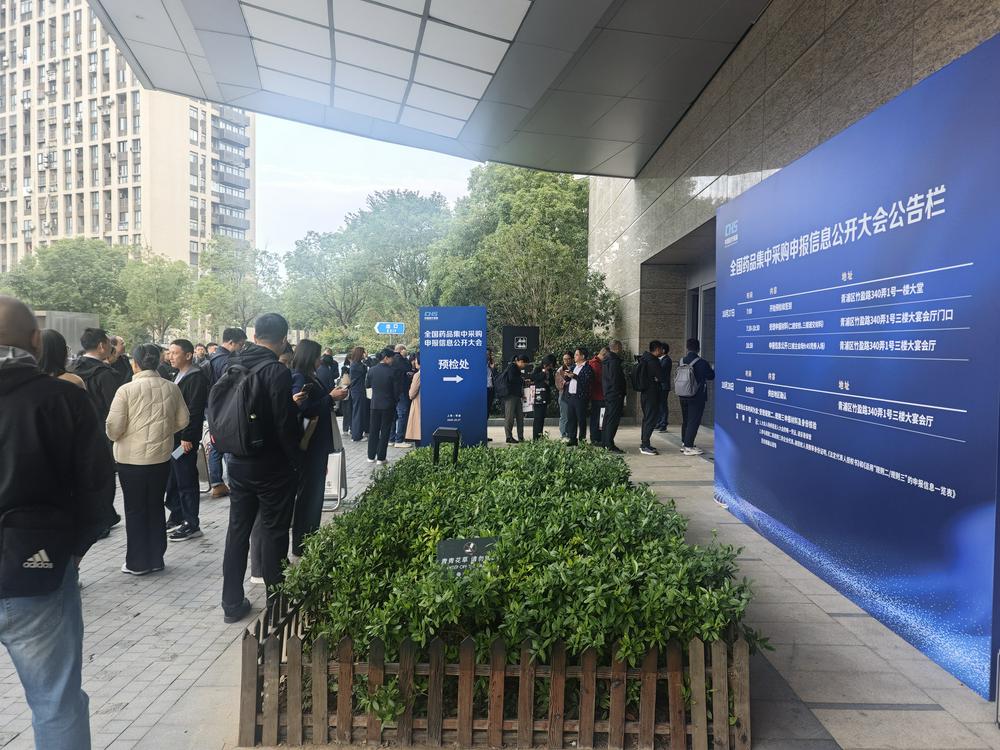
Comprehensive Optimization of Rules! The 11th Batch of National Procurement Opens Bidding Today, Involving 55 Varieties and Over 400 Companies Competing

PBOC to Conduct 1.2 Trillion Yuan Outright Reverse Repo Operation on October 8 with a Three-Month Term

National Bureau of Statistics: October Manufacturing PMI at 49%, down 0.8 percentage points from the previous month