Don't Bet on a One-Way Yuan: What the PBOC's FX Reserve Ratio Hike Really Signals
After rolling out structural tools to support the capital market, including the SFISF swap facility and the stock buyback and increase lending programme, the central bank acted again on November 3, ra
After rolling out structural tools to support the capital market, including the SFISF swap facility and the stock buyback and increase lending programme, the central bank acted again on November 3, raising the FX deposit reserve ratio for financial institutions by 2 percentage points to cool a rapidly appreciating renminbi.
The FX deposit reserve ratio is a well-established, market-based tool for adjusting FX market liquidity. Raising the ratio means banks must deposit a larger share of their FX deposits with the central bank, so the dollars available for circulation in the market contract accordingly.
The adjustment is intended to dispel the market's habit of betting on a one-way move, guard against the procyclical behaviour generated by concentrated settlement by companies and households, and sever the chain through which one-way appreciation expectations reinforce themselves.
More importantly, through this open and transparent market-based measure the central bank is also signalling its policy intent to stabilise market expectations and keep the RMB exchange rate basically stable at a reasonable and balanced level.
The current strengthening of the RMB has a solid fundamental underpinning. So far this year the onshore RMB has appreciated 4.76% in cumulative terms, and after October 14 it rose for 14 consecutive trading days, markedly accelerating in the short term and breaking through the 6.65 mark on November 2.
Looking back over the decade since the August 2015 reform of the exchange rate regime, the RMB and the dollar have long moved in a seesaw pattern, each gaining as the other lost. This year that traditional relationship has changed.
The core driver of the current move is sustained strong foreign trade performance. A goods trade surplus of nearly US$938.1 billion in the first three quarters is the most solid fundamental engine behind the stronger RMB. Foreign trade companies convert the foreign exchange they earn abroad into RMB and repatriate it in a steady stream — precisely the most tangible support for this round of appreciation.
Market forces remaining dominant in exchange rate formation is also a consistent policy orientation. The PBOC's third-quarter monetary policy committee meeting already made clear the need to let the market play a decisive role in exchange rate formation, strengthen the resilience of the FX market, guard against herd behaviour and curb the build-up of irrational expectations.
The value of a market-based exchange rate mechanism lies in using price signals to absorb internal and external shocks and balance the balance of payments. But markets always have a procyclical impulse: once one-way expectations form, trading behaviour amplifies the move and produces an exchange rate overshoot detached from fundamentals. Whether appreciation or depreciation is too fast, it makes life harder for foreign trade companies.
The core purpose of raising the FX deposit reserve ratio is not to reverse the direction of appreciation but to smooth out excessively rapid short-term gains and reinforce the two-way character of the RMB. It is also a reminder to market participants that companies and financial institutions alike must break out of one-way thinking, treat exchange rate volatility as normal and make good use of hedging tools to offset currency risk.
Looking ahead, the RMB's path is far from one-way and multiple variables continue to create uncertainty.
The China-US interest rate spread remains inverted near historical highs. The yield gap between 10-year Chinese and US government bonds briefly exceeded 360 basis points and currently stands at about 330 basis points. If the Federal Reserve continues to raise rates, pressure from the inverted spread could intensify further.
Developed economies are under growth pressure in a tightening environment, the elevated capital expenditure in global AI is unlikely to be sustained, external demand may weaken next year and China's export growth also faces variables.
Two-way fluctuation will remain the long-term norm for the RMB. For all market participants, abandoning the speculative habit of betting on specific levels or a one-way move and focusing instead on hedging risk is the most reliable way to cope with exchange rate volatility.
Related Articles
At the end of February 2025, the balance of domestic and foreign currency deposits stood at 317.66 trillion yuan, representing a year-on-year increase of 7.1%
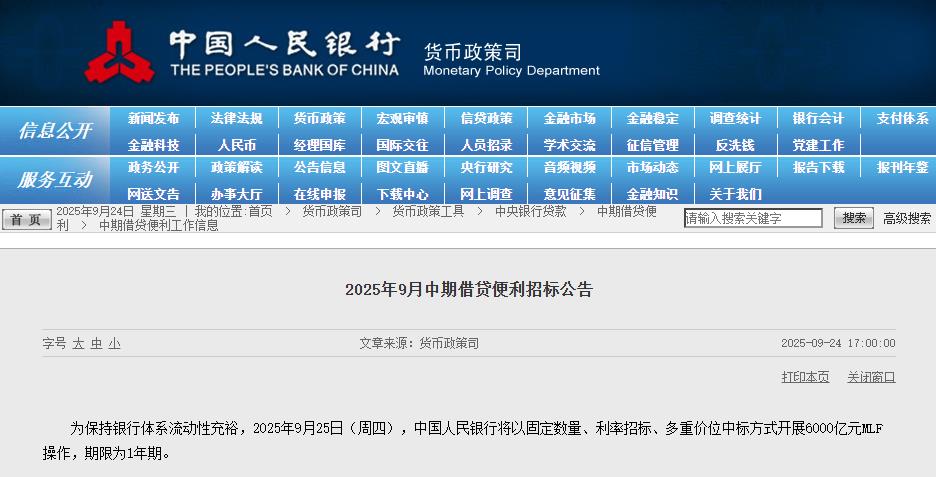
The People's Bank of China will conduct a 600 billion yuan Medium-term Lending Facility (MLF) operation on September 25th

Global Financial Brief | Saturday, July 4, 2026

RMB Ascends Toward Mainstream Global Reserve Currency Status
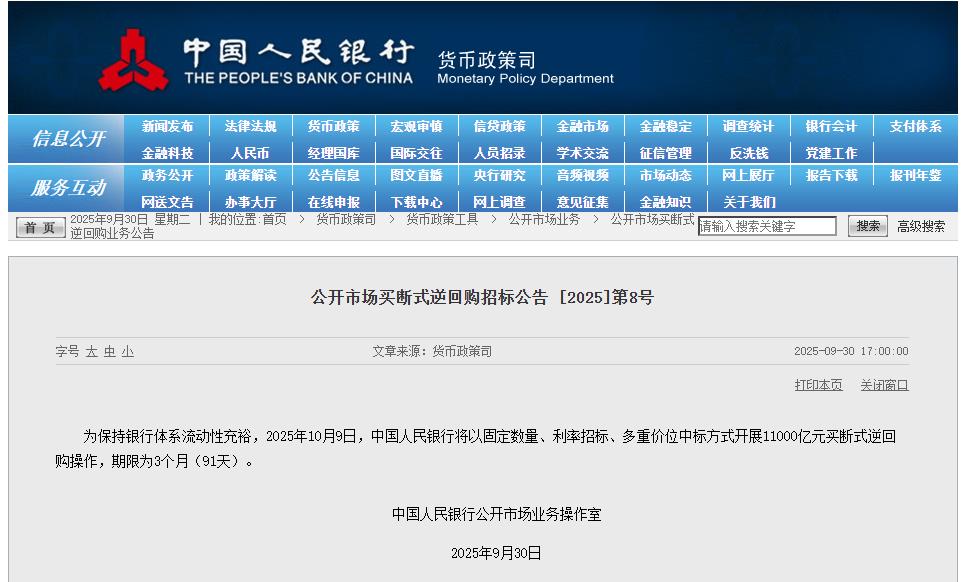
People's Bank of China: 110 billion yuan in three-month outright reverse repurchase operations to be conducted on October 9