All Three RMB Exchange Rate Indexes Rise as the Yuan Is Seen Extending Modest Appreciation
Xinhua Finance, Shanghai, November 2 (Ge Jiaming) — Data released by the China Foreign Exchange Trade System show that all three RMB exchange rate indexes rose in the week to October 30. The CFETS RMB
Xinhua Finance, Shanghai, November 2 (Ge Jiaming) — Data released by the China Foreign Exchange Trade System show that all three RMB exchange rate indexes rose in the week to October 30. The CFETS RMB exchange rate index stood at 103.77, up 0.36 week on week and the highest since July 2022; the BIS currency basket index stood at 111.57, up 0.55 and a record high; and the SDR currency basket index stood at 98.85, up 0.29.
Last week (October 26-30), the dollar index closed at 101.9669, up 0.21% over the week, with most non-US currencies weakening. The euro fell 0.39% against the dollar over the week and the yen dropped 0.47%.
The RMB appreciated about 0.77% against the dollar over the week and continued to firm against a basket of currencies. The central parity rate was fixed at 6.7138, a cumulative gain of 42 pips for the week. The parity rate has strengthened steadily through October, from 6.7351 at the end of September to 6.7138 on October 30, a cumulative adjustment of 213 pips.
Li Liuyang, head of FX research at CICC's research department, believes the current resilience of the RMB comes mainly from settlement flows generated by exports. Exports rose 36.3% year on year in September and the settlement ratio climbed to 65.3%, with net settlement accounting for a high share, providing important support for the currency. Should the dollar strengthen in phases, the RMB's depreciation against it may be smaller than the historical average.
The impact of a trade surplus on the exchange rate also depends on whether companies convert their FX earnings into RMB. Sustained export growth provides the source of settlement funds, while a greater willingness to settle adds to spot FX supply. Judging the RMB's path therefore requires watching both export volumes and whether the settlement ratio can stay elevated.
Liu Meng, an analyst in the financial markets department at China Construction Bank, said in mid-October that the RMB should continue to trade in two-way fashion with the dollar and remain modestly firm within the year, with attention in the fourth quarter on seasonal settlement demand, the effect of a widening China-US rate spread on trading behaviour and policy developments.
Li Liuyang noted, however, that the pace of adjustment in the central parity rate has already slowed. He expects the RMB to continue modest appreciation in November, though at a slower pace than in October. Apart from the dollar's difficulty in falling appreciably in the near term, corporate year-end settlement demand may be released mainly in December, leaving November with relatively weak seasonal support.
Li Liuyang expects the dollar index to trade mainly between 100.5 and 103.0 in November, centred around 101.8. Elevated energy prices and shipping costs, the relative resilience of the US economy and French fiscal risks may continue to support the dollar, but with job growth and wage costs yet to reaccelerate and core inflation lacking evidence of broad-based increases, the dollar needs fresh data support to break above 103.
HSBC's November FX outlook also favours consolidation of the dollar near recent highs. The bank argues that US economic resilience, the Fed's hawkish stance and pressure on other currencies can limit the dollar's downside, but a new leg higher needs fresh catalysts. Even if the Fed pauses, the dollar need not weaken as long as expectations of further tightening remain intact.
Qu Xinrong, chief macro analyst at Guotai Junan Futures, took a relatively bullish view of the dollar in a fourth-quarter FX report published on October 21. He expects the dollar index to trade between 100 and 104 in the fourth quarter, supported by US economic resilience, elevated inflation and rate hike expectations, while the offshore RMB may oscillate between 6.65 and 6.75 against the dollar with an appreciating bias overall.
This implies that a stronger dollar index and RMB appreciation against the dollar may coexist for a time. The dollar index mainly reflects the dollar's performance against the euro, the yen and other currencies, whereas the RMB is also affected by China's own trade and capital flows; the two do not always move in perfect inverse lockstep.
For the RMB's path through year-end and beyond, institutional forecasts differ in emphasis.
Lu Zhe, chief economist at Soochow Securities, said the RMB may trade two-way between 6.60 and 6.75 against the dollar in the fourth quarter on a mildly appreciating bias, and could move to around 6.63 by end-March 2027 under a neutral scenario. He believes tighter overseas liquidity limits the dollar's downside, but seasonal year-end settlement still provides support.
Liu Tao, a senior researcher at the International Institute of Finance of the China Chief Economist Forum, also believes the RMB will most likely remain firm with two-way fluctuation, but that the basis for a sharp short-term one-way appreciation is not yet sufficient. Export strength and settlement demand should provide support, while the inverted China-US rate spread, financial account deficits and a high export base may restrain the pace of gains.
Entering November, the market will put these judgments to the test. Li Liuyang said that if exports and settlement remain strong and the dollar trades in a range, the RMB retains a basis for modest appreciation; if the dollar keeps rebounding or exports and settlement fall back markedly, the RMB may see a periodic correction.
Related Articles
At the end of February 2025, the balance of domestic and foreign currency deposits stood at 317.66 trillion yuan, representing a year-on-year increase of 7.1%
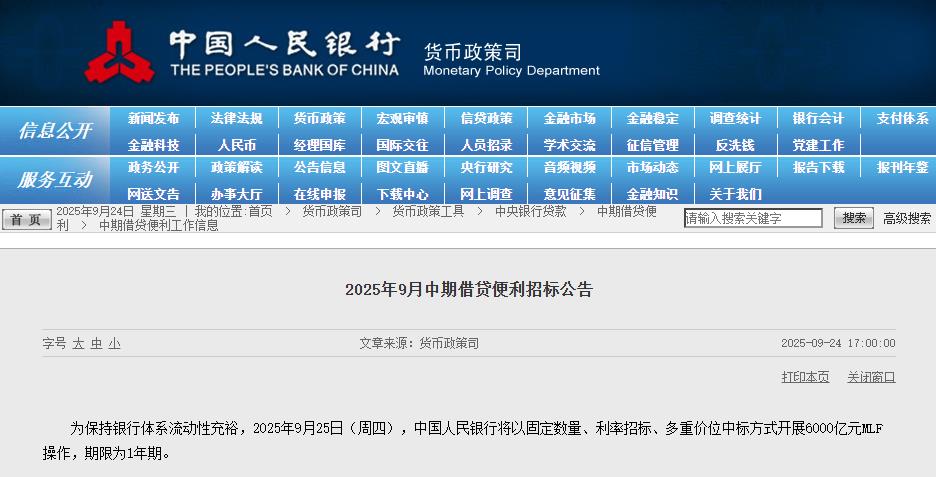
The People's Bank of China will conduct a 600 billion yuan Medium-term Lending Facility (MLF) operation on September 25th

Global Financial Brief | Saturday, July 4, 2026

RMB Ascends Toward Mainstream Global Reserve Currency Status
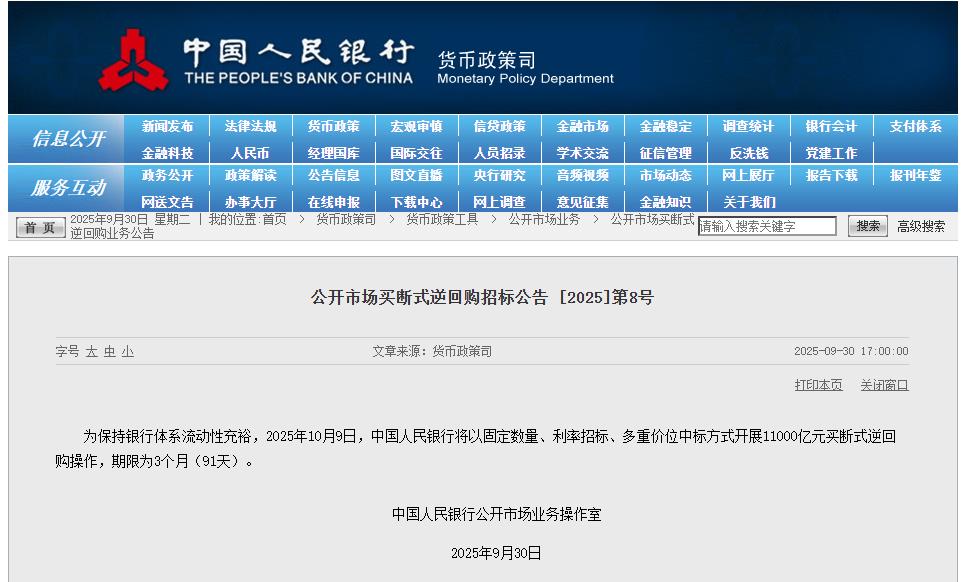
People's Bank of China: 110 billion yuan in three-month outright reverse repurchase operations to be conducted on October 9