First Hike in Nearly Five Years: PBOC Lifts FX Deposit Reserve Ratio as Offshore Yuan Falls Over 280 Pips to 6.675
Today the People's Bank of China issued an announcement stating that, in order to strengthen foreign exchange liquidity management at financial institutions, it will raise the FX deposit reserve ratio
Today the People's Bank of China issued an announcement stating that, in order to strengthen foreign exchange liquidity management at financial institutions, it will raise the FX deposit reserve ratio by 2 percentage points effective November 15, 2026, lifting it from the current 4% to 6%. This is the first increase in the FX deposit reserve ratio in nearly five years, since December 2021.
The FX market reacted quickly once the news landed. The offshore RMB weakened against the dollar in short order, with the USD/CNH rate touching the 6.675 mark as of 17:00 today, a intraday loss of more than 280 pips. The onshore rate retreated in tandem, falling below 6.67 intraday, more than 250 pips weaker than the previous close.
Several market participants told Cailian Press that the move directly targets the recent excessively rapid appreciation of the RMB and the build-up of one-way expectations.
Since the start of 2026, the RMB has strengthened against the trend even as the dollar index rebounded from its lows and the China-US negative interest rate spread widened.
Wind data show that the RMB central parity rate was around 7.023 at the start of the year, while by early November onshore and offshore traded rates had appreciated about 4.4% in cumulative terms to 6.715, a near four-year high. The RMB has also gained against a basket of currencies: as of October 30, the CFETS RMB exchange rate index had risen to 103.77, the highest since July 2022.
From a supply-demand perspective, a sustained balance of payments surplus provides solid fundamental support for the RMB. Data from the State Administration of Foreign Exchange show that in the first three quarters of 2026 banks recorded a cumulative settlement surplus of US$394.1 billion, including US$56.2 billion in September alone, while net cross-border capital inflows of non-bank sectors reached US$40.7 billion.
Guan Tao, chief economist at Huafu Securities, believes the current appreciation is mainly market-driven, but that currency market liberalisation makes "herd behaviour" and irrational expectations more likely, raising the risk of overshooting. At its third-quarter monetary policy committee meeting, the PBOC mentioned for the first time the need to guard against herd behaviour and self-reinforcing irrational expectations, and the latest policy is the formal implementation of that forward-looking guidance.
As a core macroprudential tool in the FX market, the FX deposit reserve ratio has a clear transmission path and distinctly countercyclical characteristics.
Cailian Press found that in 2021, when appreciation pressure was intense, the PBOC raised the ratio twice in succession to 9%; during the depreciation pressure of 2022-2023, it cut the ratio three times to 4%.
Wang Qing of Orient Gold Credit's research and development department said the increase means financial institutions must raise more foreign currency funds to deposit with the central bank, directly tightening dollar liquidity in the domestic market and pushing up dollar rates, which in turn weakens companies' willingness to settle foreign exchange and restrains the momentum of RMB appreciation. More importantly, the 2-percentage-point magnitude exceeds the conventional 1-point adjustment, sending a clear policy signal that regulators intend to curb excessive appreciation and prevent overshooting, with a strong dampening effect on one-way appreciation expectations.
Institutional estimates based on US$1.2 trillion of foreign currency deposits at financial institutions at end-September suggest the increase theoretically implies about US$24 billion of additional reserve requirements, significantly shrinking the FX funds banks can deploy at their own discretion.
"A single policy adjustment will not change the long-term trend of the exchange rate; the core objective is to smooth volatility rather than reverse direction," Wang Qing judged. After the policy takes effect, RMB appreciation against the dollar will slow and shift more towards two-way fluctuation, but supported by strong export fundamentals the exchange rate is likely to remain firm through the end of the year.
Liao Bo, chief macro analyst at Northeast Securities, also noted that the fourth quarter is the traditional seasonal peak for settlement and that the adjustment will help stabilise FX market expectations and keep trading rational and orderly. Companies should not judge the top or bottom of the exchange rate on the basis of a single policy change, however: exporters need to watch the squeeze on margins from appreciation, while importers should establish routine exchange rate risk management based on their own operating needs.
Related Articles
At the end of February 2025, the balance of domestic and foreign currency deposits stood at 317.66 trillion yuan, representing a year-on-year increase of 7.1%
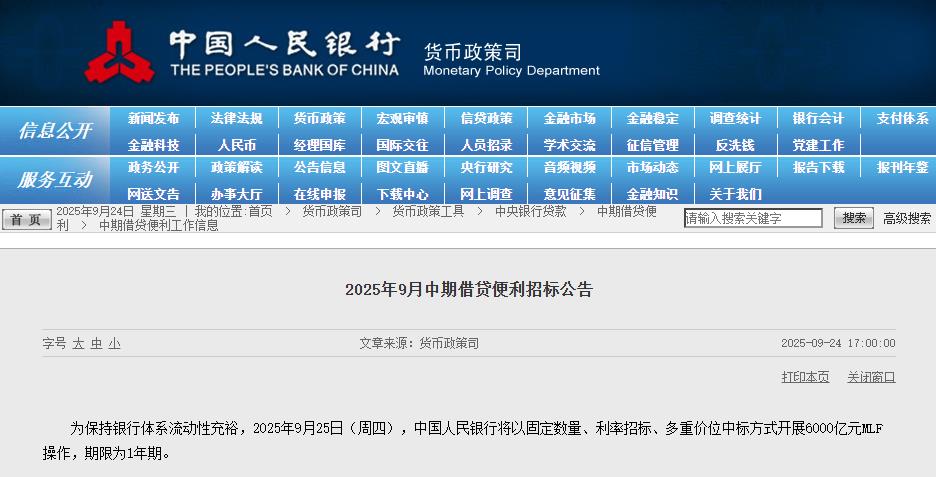
The People's Bank of China will conduct a 600 billion yuan Medium-term Lending Facility (MLF) operation on September 25th

Global Financial Brief | Saturday, July 4, 2026

RMB Ascends Toward Mainstream Global Reserve Currency Status
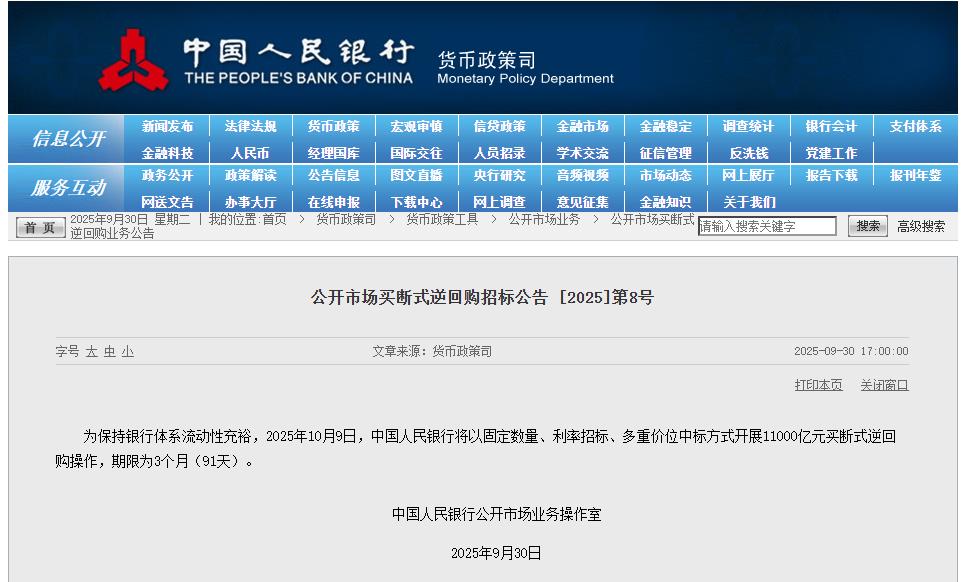
People's Bank of China: 110 billion yuan in three-month outright reverse repurchase operations to be conducted on October 9