PBOC Moves to Cool the Yuan With First FX Deposit Reserve Ratio Hike in Nearly Five Years
To dampen speculative bets on a one-way, rapid appreciation of the renminbi, the central bank stepped in at the right moment to adjust foreign exchange liquidity. On November 3, the People's Bank of C
To dampen speculative bets on a one-way, rapid appreciation of the renminbi, the central bank stepped in at the right moment to adjust foreign exchange liquidity.
On November 3, the People's Bank of China announced that, effective November 15, it will raise the foreign exchange deposit reserve ratio (FX RRR) for financial institutions by 2 percentage points, from the current 4% to 6%.
The market reacted immediately, and the RMB fell sharply against the US dollar. The central parity rate was set 4 pips weaker at 6.7150. As of 18:00 on November 3, the onshore RMB traded at 6.6710, down 0.38% on the day, while the offshore rate stood at 6.6711, down 0.36%. In the previous session the onshore rate had climbed to an intraday high of 6.6449, the strongest level since June 2022.
This is the first increase in the FX deposit reserve ratio in nearly five years. Looking back at the policy cycle, the last adjustment came in 2023, when the PBOC cut the ratio from 6% to 4% as the yuan came under depreciation pressure; the previous hike dates back to December 15, 2021. Restarting the reverse operation after so many years reflects a market in which the RMB has kept strengthening and one-way appreciation expectations have steadily accumulated.
Understanding the move begins with understanding the tool itself. The FX deposit reserve is the share of foreign currency deposits that financial institutions must deposit with the PBOC in accordance with regulations — in effect, commercial banks hand a portion of their US dollars to the central bank.
Its transmission mechanism is similar to that of the RMB reserve requirement ratio. When the RMB appreciates too quickly, the PBOC raises the FX deposit reserve ratio, tightening onshore US dollar liquidity and easing appreciation pressure; when the RMB depreciates too quickly, it lowers the ratio to ease depreciation pressure.
"Raising the ratio means banks must deposit more of their foreign currency funds with the central bank, so the dollars available for lending, investment or sale in the domestic market are correspondingly reduced. That tightens onshore dollar liquidity, raises the cost of holding surplus dollars and indirectly curbs the urge to convert foreign exchange into RMB, easing appreciation pressure," said Wen Bin, chief economist at China Minsheng Bank.
How forceful is the move? Based on roughly US$1.2 trillion of foreign currency deposits at end-September 2026, a 2-percentage-point increase implies that about US$24 billion of FX liquidity will be frozen.
Wen Bin argued that although this is small relative to average daily turnover of more than US$800 billion in the RMB FX market and is not enough on its own to change the supply-demand balance, it sends an unmistakable signal that the authorities intend to keep the exchange rate stable, which helps shatter one-way appreciation expectations among some market participants, anchors expectations and safeguards the smooth operation of the FX market.
Adjusting the FX deposit reserve ratio is a macroprudential management measure taken by the central bank and is consistent with international rules and practice.
The PBOC has adjusted the ratio on several occasions. In 2021 it raised the ratio twice, to 9%; between 2022 and 2023 it cut the ratio three times, down to the current 4%.
On the strength of the measure, Lian Ping, chairman of the China Chief Economist Forum and dean of the International Institute of Finance, said that lifting the ratio from 4% to 6% remains below the historical peak of 9% reached in 2021, and the 2-percentage-point increase follows the conventional magnitude. This shows the central bank remains restrained in its use of this quantity-based tool and has no intention of tightening sharply. At the same time, the higher ratio leaves the PBOC with a larger pool of FX reserves, which can be released through reverse operations should FX supply tighten or the exchange rate overshoot in the other direction.
The pace of RMB appreciation has accelerated since late October. The onshore rate rose for 14 consecutive trading days from October 14, with gains of about 100 pips in each of the past two sessions, breaking through 6.65 on November 2. Why did the central bank act now?
The current round of appreciation began in April 2025. Earlier this year, in response to an accelerating rise, the PBOC cut the FX risk reserve ratio to signal its intent to keep the currency stable. The RMB has strengthened again recently: since mid-September, even as the dollar index rose about 3% from below 99 to around 102, the RMB continued to appreciate one-directionally against the dollar, while the CFETS RMB exchange rate index climbed from 101.49 on September 11 to 103.77 at end-October, a gain of more than 2%.
Wen Bin believes that appreciation driven by corporate settlement behavior is self-reinforcing and procyclical: the stronger the appreciation expectations, the more urgently companies convert foreign exchange, which in turn may push the exchange rate higher still. The central bank's move now targets precisely this risk of self-reinforcing one-way expectations.
Lian Ping analysed that after the increase, banks must set aside 2 percentage points more of their FX deposits with the central bank, leaving them with fewer usable FX positions and reducing dollar supply in the spot market. That helps slow the pace of rapid appreciation while weakening speculative bets on one-way gains and preventing companies and households from rushing to convert foreign exchange.
The considerations behind the move go beyond a single factor. China has run large trade surpluses over the past two years and corporate settlement demand has been continuously released; pre-emptively offsetting the seasonal settlement peak at year-end was also a factor.
History shows clear seasonality in RMB settlement and sales. November through January is typically the peak settlement period for exporters, as companies face rigid RMB needs for year-end accounts, payroll, tax payments and supplier payments, and therefore convert dollars into yuan in concentrated fashion.
Lian Ping noted that the policy takes effect on November 15, just before the seasonal settlement peak begins. A 2-percentage-point increase will reduce the FX liquidity available to banks to some extent and lower dollar supply in the spot market, thereby offsetting the upward pressure on the RMB that concentrated year-end settlement might otherwise create.
Acting now also responds to the concerns of exporters and eases the margin squeeze caused by rapid appreciation. The sustained rise in the RMB has indeed generated exchange losses for some exporters, with home appliances, construction machinery, auto parts and active pharmaceutical ingredients among the sectors under the most visible pressure.
From the first half of 2026 through the first three quarters, a number of listed companies mentioned in their financial reports and earnings briefings that the periodic appreciation of the RMB had produced exchange losses and disturbed short-term book profits, creating a pattern of "revenue growth with margin pressure."
Lian Ping added that it should also be recognised that appreciation helps lower the import cost of energy, raw materials and equipment, and that keeping policy objectives reasonable and moderate helps balance internal and external equilibrium.
In Lian Ping's view, the increase is a macroprudential adjustment to one-way exchange rate moves and FX liquidity at a time when the RMB is relatively strong and FX supply is ample. Its purpose is not to tighten RMB liquidity or reverse the direction of appreciation, but to steady the pace of gains, increase two-way flexibility and avoid one-way rapid appreciation expectations — guiding financial institutions, exporters and households in advance to treat currency risk rationally and to make greater use of hedging tools.
Looking ahead, Wang Qing, chief macro analyst at Orient Gold Credit, judges that after the measure takes effect the RMB's appreciation against the dollar will slow and increasingly give way to two-way fluctuation. Supported mainly by strong exports, however, the exchange rate is likely to remain on the firm side through the end of the year. Generally speaking, the main objective of stabilising measures such as raising the FX deposit reserve ratio is to contain the amplitude of exchange rate swings rather than to change the direction of the trend.
The adjustment is consistent with the central bank's long-standing policy stance. The PBOC's recent "Policy Stance on the RMB Exchange Rate" made clear that the central bank does not preset a target level for the exchange rate, but that if the exchange rate fluctuates sharply in the short term and "herd behaviour" and irrational expectations emerge, it will introduce market-based measures to prevent disruptive short-term overshooting.
Authoritative market experts believe the increase will help bring FX supply and demand into balance and break the self-fulfilling nature of appreciation expectations.
These experts cautioned that the RMB outlook remains highly uncertain and that several factors could push the currency weaker, chiefly the historically wide inverted China-US interest rate spread and the impact of geopolitical conflicts.
The yield gap between 10-year Chinese and US government bonds has widened to as much as 360 basis points and currently stands at about 330 basis points. The market widely expects the Federal Reserve may still raise rates between the end of this year and next year, putting further widening pressure on the inverted spread. Rate hikes would weigh on growth in developed economies, the surge in global AI capital expenditure may not be sustained, external demand may soften next year and the export outlook carries uncertainty.
Faced with exchange rate volatility, these experts advise companies to adhere to a risk-neutral approach, refrain from chasing the market to convert foreign exchange and avoid currency speculation. During periods of RMB appreciation, some companies record exchange losses in their financial statements that are in fact unrealised paper losses; they should use FX derivative instruments to hedge currency risk and avoid unnecessary herding into settlement.
Related Articles
At the end of February 2025, the balance of domestic and foreign currency deposits stood at 317.66 trillion yuan, representing a year-on-year increase of 7.1%
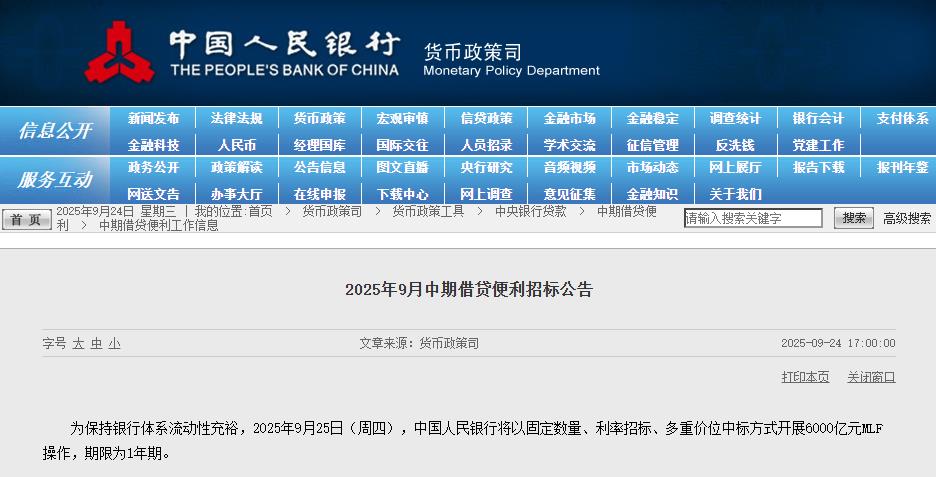
The People's Bank of China will conduct a 600 billion yuan Medium-term Lending Facility (MLF) operation on September 25th

Global Financial Brief | Saturday, July 4, 2026

RMB Ascends Toward Mainstream Global Reserve Currency Status
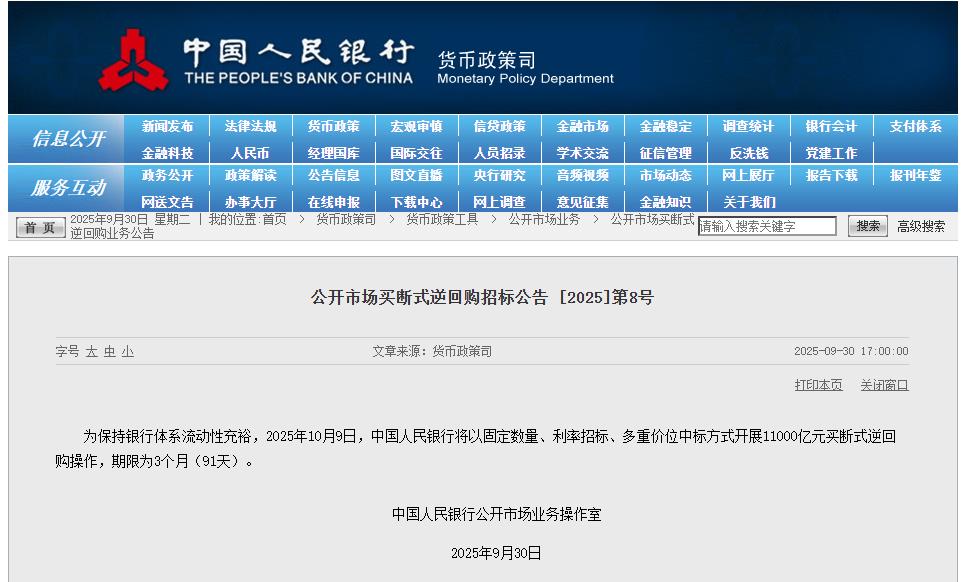
People's Bank of China: 110 billion yuan in three-month outright reverse repurchase operations to be conducted on October 9