Global Central Banks Are Quietly Buying Gold at More Than Four Times the Pre-2022 Pace as Goldman Sachs Sees Reserve Diversification Persisting
Goldman Sachs said in a report this week that global central banks bought 79 tonnes of gold in August — more than four times the average pace before the outbreak of the Russia-Ukraine conflict in 2022
Goldman Sachs said in a report this week that global central banks bought 79 tonnes of gold in August — more than four times the average pace before the outbreak of the Russia-Ukraine conflict in 2022. Meanwhile, European countries including the Netherlands and France are adjusting the storage arrangements for their gold reserves, and a growing number of central banks are reluctant to disclose where their gold is kept.
By Goldman's estimate, central banks purchased 79 tonnes of gold in August, far above the pre-2022 monthly average of 17 tonnes. On a seasonally adjusted three-month basis, central bank gold purchases have averaged 85 tonnes per month.
China is currently the largest identifiable gold buyer, with Goldman estimating its August purchases at about 25 tonnes. However, because some central banks' buying is hard to track, the actual distribution of buyers may differ from public data, and other economies' purchases could exceed China's.
Goldman noted that the pace of the People's Bank of China's gold buying is not necessarily worrying, and other emerging market central banks are much the same. The key point is that, relative to a reasonable long-term allocation level, China's gold share of reserves still has room to rise.
More importantly, the motivation for countries to reduce dependence on G7 reserve currencies and diversify foreign exchange reserves is expected to persist. Especially against the backdrop of intensifying geopolitical conflicts and trade frictions, gold's appeal as a reserve asset has not faded.
By contrast, developed-economy central banks have largely stayed out of the buying boom of the past four years, because they historically accumulated large gold reserves. That means the focus of gold reserve management is shifting: for some central banks, the question is no longer how much gold to buy, but how to ensure existing reserves can be mobilized quickly when needed.
Gold reserve security in the spotlight
Recent moves by European central banks to adjust gold storage arrangements offer concrete cases. In September, the Dutch central bank disclosed that over the past six months it had moved 86 tonnes of gold from New York and Ottawa to London. The bank said the move was related to an increasingly turbulent geopolitical situation and aimed to improve the tradability of the gold so it could be put to use faster in a severe crisis.
The Dutch central bank holds that gold kept in London and custodied at the Bank of England is easier to trade and transfer; by comparison, gold stored in New York and Ottawa cannot be mobilized as quickly.
In March this year, the Bank of France also announced it had sold 129 tonnes of gold stored in New York — equivalent to 5% of its total gold reserves — and rebought gold in Europe. However, the French central bank attributed the move to the need to raise gold purity rather than to geopolitical factors: it wants to lift the purity of its gold reserves above 99.99%, and the gold it sold in the US did not meet that standard.
Goldman's data show that in August, central bank gold held at the New York Fed fell by 40 tonnes, while gold held at the Bank of England rose by 46 tonnes. The shift echoes the trend of some European central banks adjusting gold storage locations, but the data alone do not prove that all central banks are pulling gold out of the United States.
Goldman's survey of central banks further shows a declining willingness to disclose where gold reserves are kept. In 2026, the share of central banks refusing to confirm their gold storage location rose to 12%, up from 10% in 2025. Meanwhile, the share adopting diversified overseas storage arrangements rose from 2% last year to 10%, and the share planning to increase the proportion of gold stored domestically rose from 5% to 9%.
In Goldman's view, these changes reflect broader concerns about reserve security and trust between states. Gold is not only a hedge against inflation and market risk; it also concerns whether reserves can be smoothly traded, transferred and used during a crisis.
(Source: Cailian Press)
Related Articles

RMB Exchange Rate Extends Two-Way Volatility as Market Pricing and Policy Transparency Keep Improving

Onshore Yuan Closes at 6.7817 Against Dollar, Down 33 Pips

Hong Kong Dollar Stablecoin Launch 2026: HKMA Issues First Licenses to HSBC & Anchor

Japan Finance Minister Katayama: Ready to Act on Currency Volatility When Necessary
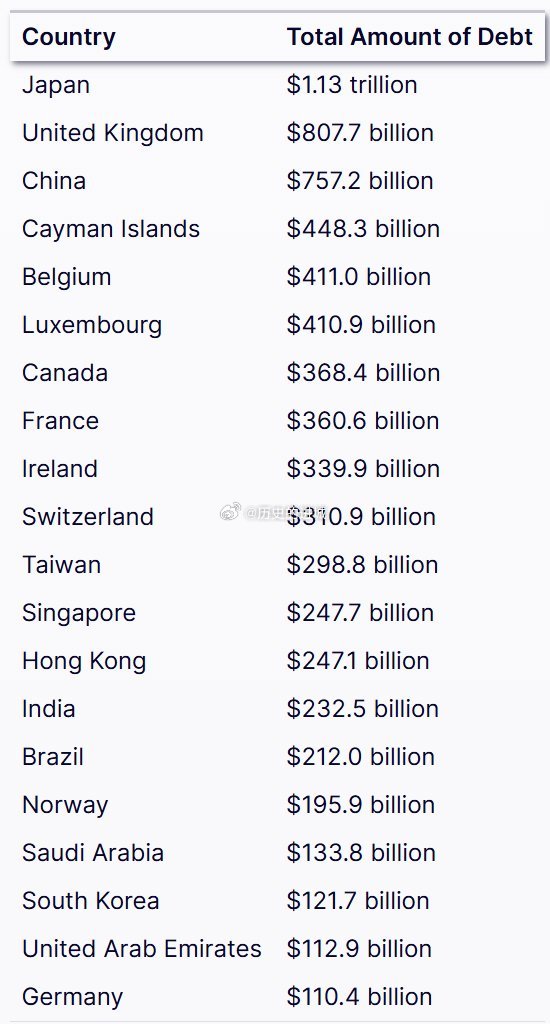
As of April 2025, the top three foreign holders of U.S. Treasury bonds are Japan, the United Kingdom, and China