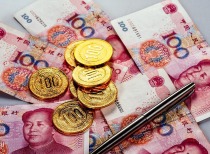
Subscribed 36 Times Over: China's Finance Ministry Issues US$2 Billion Sovereign Bonds in Hong Kong
On November 20, China's Ministry of Finance disclosed that on November 19 it had successfully issued US$2 billion of sovereign bonds in Hong Kong, with a three-year maturity and a coupon of 4.821%. Th
On November 20, China's Ministry of Finance disclosed that on November 19 it had successfully issued US$2 billion of sovereign bonds in Hong Kong, with a three-year maturity and a coupon of 4.821%.
The dollar-denominated sovereign bonds were warmly received, with enthusiastic subscriptions from international investors. Total subscriptions reached US$72.3 billion, 36 times the issue size. All the bonds will be listed on the Hong Kong Stock Exchange.
The bonds attracted a diverse investor base with broad geographic distribution. Investors from Asia, Europe and the Middle East, and the Americas accounted for 52%, 34% and 14% respectively, while sovereign, fund and asset-management, bank and insurance, and dealer investors made up 59%, 29%, 11% and 1% respectively.
Notably, including this issue, the Ministry of Finance has issued two batches of dollar sovereign bonds in Hong Kong since 2024, totaling US$6 billion. Compared with the previous Hong Kong dollar sovereign bond issue in November 2025, the three-year coupon rose from 3.646% to 4.821%, while the subscription multiple climbed from 30 times to 36 times.
Chen Maobo: International investors highly recognize China's sovereign bonds
Hong Kong Financial Secretary Paul Chan Mo-po said at the issuance ceremony that international investors hold China's sovereign bonds in high regard. He noted that over the years, the currencies and varieties of sovereign bonds issued by the Ministry of Finance in Hong Kong have become increasingly diverse. Besides dollar bonds, renminbi government bonds have been issued in Hong Kong for 18 consecutive years, with a cumulative total exceeding 500 billion yuan. In May this year, Hong Kong also saw its first issuance of renminbi green sovereign bonds, with subscriptions exceeding the issue size more than tenfold.
Chan stressed that issuing sovereign bonds in Hong Kong is an important step for the country to make better use of domestic and international markets and resources and to expand high-level opening up. Issuing offshore government bonds not only provides high-quality asset allocation for international investors, but also helps improve the offshore renminbi yield curve and provides a pricing benchmark for the market. About 70% of bonds issued overseas by mainland companies are issued in Hong Kong, making the pricing-benchmark role of sovereign bonds all the more important.
Chan said that for many years Hong Kong has been Asia's largest hub for arranging international bonds. Last year, Asian international bonds arranged through Hong Kong exceeded US$130 billion, about a quarter of the total. Issuers can choose to raise funds in dollars, renminbi, Hong Kong dollars or euros as needed. To further develop Hong Kong's bond market, the SAR government published a roadmap for the development of fixed-income and currency markets in September 2025, aiming to integrate primary issuance, secondary trading, custody and settlement, and risk management into a larger market system that facilitates both issuer financing and investor asset allocation and risk management.
Chan revealed that several initiatives are advancing in parallel.
First is broadening the bond market. Taking the lead, the SAR government will issue about HK$150–200 billion equivalent of bonds each year over the next five years, supporting infrastructure projects such as the Northern Metropolis and offering bonds in different currencies and maturities. The government is also actively attracting governments, financial institutions, multilateral organizations and companies worldwide to issue bonds in Hong Kong to diversify the issuer base. Recent dim-sum bond issuances in Hong Kong by issuers from Indonesia and Kazakhstan are good examples.
Besides breadth, depth is needed, with a focus on liquidity. In July this year, the People's Bank of China, the Hong Kong Monetary Authority and the Securities and Futures Commission announced measures to support Hong Kong's fixed-income and offshore renminbi markets, which are being implemented step by step. Bond Connect Company Limited will build an electronic trading platform, and regulators are exploring centralized clearing of bond repos. From the beginning of this month, mainland government bonds and policy-bank bonds held via Bond Connect, as well as sovereign bonds issued overseas by the Ministry of Finance, can be used as collateral at the HKEX derivatives clearing house. These measures help improve secondary-market liquidity, broaden the use of bonds as collateral, enhance capital efficiency, and lower investors' trading and financing costs.
On offshore renminbi business, Chan said the SAR government is advancing work on three fronts: liquidity, infrastructure and products. As an example of products, five-year China government bond futures were listed in August this year. HKEX also launched an offshore renminbi bond index early this week, further improving the offshore renminbi investment and risk-management ecosystem.
Meanwhile, Chan said the government is building next-generation financial infrastructure, including issuing bonds on digital platforms and promoting bond tokenization to improve efficiency. Since 2023, the SAR government has issued four batches of tokenized green bonds and will continue to do so regularly to encourage more issuers to participate.
Finally, Chan said this renewed issuance of dollar sovereign bonds in Hong Kong both strongly supports Hong Kong's bond market and injects new momentum into its development. Looking ahead, with the country's solid backing, Hong Kong will continue to leverage its "one country, two systems" advantage as a bridge between the mainland and the world, fully supporting the work of the Ministry of Finance and relevant mainland ministries, contributing new and greater strength to building China into a financial power, and creating new value for global investors.
Related Articles
Hong Kong's Offshore RMB Ecosystem Keeps Improving as Policy Implementation Accelerates
Onshore RMB Closes at 6.7650 Against USD, Gains 35 Basis Points
China Bank Forex Settlement Surplus Reaches $35.8 Billion in May as Foreign Investors Net Buy Domestic Stocks and Bonds