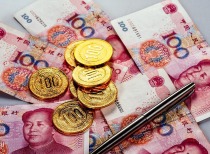
Cross-Border Finance Helps "Made in Guangdong" Go Global with Ease
The shipbuilding industry is currently in a high-prosperity cycle, with orders at CSSC Huangpu Wenchong Shipbuilding already booked through 2030. "This is a happy kind of trouble," said the company's
The shipbuilding industry is currently in a high-prosperity cycle, with orders at CSSC Huangpu Wenchong Shipbuilding already booked through 2030.
"This is a happy kind of trouble," said the company's chief accountant.
Orders keep growing, but the long fulfillment cycle brings challenges in exchange-rate volatility, supply-chain coordination and cost control. Reducing FX risk and improving settlement efficiency have become key reasons for the company to adopt cross-border renminbi settlement.
Recently, reporters from Southern Finance accompanied a research team from the Guangdong Branch of the People's Bank of China (the Guangdong Branch of the State Administration of Foreign Exchange) to Nansha and Huizhou, examining settlement changes behind Chinese companies' overseas expansion.
Guangdong manufacturers are accelerating their push overseas, and the scale and complexity of cross-border transactions are rising. As product competitiveness strengthens, firms are gaining stronger pricing power in international markets and need a more efficient, stable and low-cost cross-border capital circulation system.
From January to October 2026, Guangdong's cross-border renminbi settlement volume reached 10.15 trillion yuan, up 26.3% year on year and accounting for 57.8% of the province's total cross-border receipts and payments in both local and foreign currencies. Renminbi settlement of trade in goods reached 3.1 trillion yuan, up 30.5%, representing 33.4% of total goods-trade receipts and payments. In capital settlement for enterprises' outbound investment and foreign investment in Guangdong, the renminbi's share exceeded 73%.
More and more companies are using the renminbi to settle their overseas business.
A ship's "renminbi ledger"
The shipbuilding sector is in a high-prosperity cycle, with leading yards' production schedules largely booked through 2030 and capacity remaining tight.
According to SWS Research, from January to September 2026 global new ship orders reached 70.71 million CGT and US$205 billion, up 57% and 55% year on year respectively, the highest order volume since 2007.
The flip side of order growth is longer business cycles. During long fulfillment periods, FX volatility becomes a key variable affecting companies' actual returns.
The chief accountant of CSSC Huangpu Wenchong gave an example: if a company signs a dollar-denominated contract at the current rate of about 6.6 yuan to the dollar, but the ship is not delivered until 2029 or 2030, a rapid appreciation of the renminbi by then could cause real FX losses.
"Pricing in foreign currencies leaves exchange-rate risk hanging over us like a sword," he said.
In August 2026, COSCO Shipping Holdings announced that its wholly owned subsidiary COSCO Assets had signed a shipbuilding agreement with CSSC Huangpu Wenchong for six 3,200-TEU new wide-body container ships, each worth about 300 million yuan, with delivery expected between 2028 and 2029.
In addition, in January this year CSSC Huangpu Wenchong signed a contract with a Singapore company to build four 4,300-TEU container ships, scheduled for delivery by the end of April 2028. That order was also settled in renminbi.
Companies have also used offshore financial markets in Hong Kong and Singapore, working with local banks and shipowners to address offshore renminbi funding and settlement. In 2025, the company explored renminbi contracts and renminbi financing with various shipping firms, broadening funding channels through financial institutions such as ICBC Leasing and BOC Leasing.
Starting from a single ship order, the renminbi settlement chain can extend further upstream.
Huangpu Wenchong's upstream consists of steel enterprises and its downstream of shipowners, with banks and financial-leasing institutions connected further out. The chief accountant explained that if shipowners pay for ships in renminbi, shipyards purchase steel in renminbi, and steel mills further push for renminbi purchases of iron ore, a renminbi capital cycle covering shipbuilding, shipping, finance and raw-material trade could take shape.
"If this chain can be connected, it will be a major circulation for the entire manufacturing sector," he said.
Policy facilitation is further accelerating renminbi settlement. CSSC Huangpu Wenchong has been included in Guangdong's list of high-quality enterprises for cross-border renminbi settlement, allowing simplified settlement at provincial banks without case-by-case document review — just instructions — significantly speeding up capital recovery. In the first half of 2026, the company completed over 1.2 billion yuan of cross-border renminbi settlement, up more than 20% year on year.
Take ICBC's Guangzhou branch as an example. Leveraging the ICBC Group's global network, it achieved over 400 billion yuan of cross-border renminbi settlement from January to October 2026, including more than 2.3 billion yuan via the Digital Currency Bridge (mBridge). In July, the branch worked with ICBC's Singapore branch to complete the country's first corporate cross-border digital-renminbi receipt from Singapore to the mainland via the CBETS platform.
"Settlement efficiency and exchange-rate risk are companies' most pressing pain points in cross-border settlement," a bank official said. Banks are guiding firms to adopt a "local-currency-first" approach through policy briefings and tailored plans to avoid FX risk at source, and are providing full-chain cross-border renminbi settlement services for overseas companies via global clearing networks and coordination with offshore institutions.
Stacks of paper documents disappear
For Liu Yang, deputy general manager of TCL Technology Group Finance Co., handling cross-border business is routine for her team. In recent years, she has noticed stacks of paper documents disappearing.
Related Articles
Hong Kong's Offshore RMB Ecosystem Keeps Improving as Policy Implementation Accelerates
Onshore RMB Closes at 6.7650 Against USD, Gains 35 Basis Points

China Bank Forex Settlement Surplus Reaches $35.8 Billion in May as Foreign Investors Net Buy Domestic Stocks and Bonds