SAFE Plans New Policy Package: Official Statement on Forex Market Stability
In the first half of 2026, despite turbulent external conditions, China’s foreign exchange market withstood external shocks and maintained stable operations, demonstrating strong vitality and resilien
In the first half of 2026, despite turbulent external conditions, China’s foreign exchange market withstood external shocks and maintained stable operations, demonstrating strong vitality and resilience.
According to Li Bin, spokesperson and deputy director of the State Administration of Foreign Exchange (SAFE), at the press conference held by the State Council Information Office on July 17, China’s forex market operated smoothly in the first half of this year, with active trading and greater stability. This was primarily reflected in record-high foreign-related payment and receipt volumes, steadily growing forex market trading volumes, stable market expectations, and modestly increasing foreign exchange reserves.
SAFE will strive to build a “more convenient, more open, more secure, and smarter” foreign exchange management system to better serve high-quality development and high-level opening-up. Li Bin stated that SAFE has always adhered to the principle of combining convenience promotion with risk prevention. On one hand, when necessary, SAFE will strengthen counter-cyclical adjustment and expectation guidance to maintain stable forex market operations and firmly prevent systemic risks. On the other hand, SAFE will strengthen forex market regulation, severely cracking down on underground banks and other forex-related illegal activities to effectively maintain the order of forex market operations.
Foreign Investment in China Shows Overall Improvement
In the first half of the year, banks’ foreign-related income and expenditure on behalf of clients totaled 9.2 trillion USD, up 21% year-on-year, reaching a record high for the same period. Bank foreign exchange settlement and sales totaled 2.9 trillion USD, up 24% year-on-year, also a record high. “These data indicate that China’s foreign-related economy maintains a sound development momentum, with increasingly active cross-border trade and investment,” Li Bin said.
In terms of cross-border payment and receipt performance, non-bank sectors including enterprises and individuals saw net capital inflows of 247.2 billion USD in the first half. By category, net inflows under goods trade continued to increase year-on-year, foreign investment in China overall rebounded, service trade income growth accelerated with narrowing service trade deficits, and domestic entities’ outward investment generally maintained growth.
Regarding the overall performance of foreign investment in China, Zhao Yuchao, spokesperson of SAFE and head of the Balance of Payments Department, further explained that balance of payments data showed net increases of approximately 160 billion USD in various types of foreign investment in China in the first five months, significantly better than the same period last year. This includes both direct investment and portfolio investment, as well as foreign deposits and loans absorbed by China. In terms of direct investment, net increases in foreign equity investment in China exceeded 50 billion USD in the first five months, with new capital contributions remaining stable and foreign enterprises’ reinvestment of earnings in China growing 35% year-on-year.
As of the end of Q1 this year, the stock of foreign direct investment in China exceeded 4 trillion USD. Excluding countries and regions with offshore center characteristics, China still ranks second globally among all economies in terms of absorbed foreign investment stock.
In the first half, foreign investment inflows into high-tech services and high-tech manufacturing grew 61% year-on-year, accounting for 36% of total capital inflows, up 11 percentage points from the same period last year. “This indicates that foreign investment in China has gradually shifted from valuing the cost and scale advantages of ‘Made in China’ toward jointly participating in ‘Created in China,’” Zhao Yuchao said.
Looking ahead, Zhao Yuchao stated that foreign investment in China is expected to continue its improving trend. China’s industrial optimization and upgrading and technological innovation will continuously bring new investment opportunities, providing foreign capital with a more stable and attractive development environment; China’s steady expansion of institutional opening-up will create more convenient policy conditions for foreign investment; and with complex and volatile international situations in recent years, China’s enhanced economic resilience and stable RMB valuation will provide more choices for global capital diversification.
FX Settlement and Sales Behavior Generally Rational and Orderly
In the first half, bank foreign exchange settlement and sales posted a surplus of 271.2 billion USD. The settlement rate of foreign exchange income (measuring willingness to sell FX) was 65%, and the sales rate of foreign exchange expenditure (measuring willingness to buy FX) was 61%, largely unchanged compared with 2025.
From recent developments, as the USD index rebounded in June and the RMB-to-USD exchange rate modestly declined, some enterprises engaged in “selling FX at highs,” pushing the settlement and sales surplus to increase on a monthly basis. Since July, settlement and sales have been largely balanced. Overall, the settlement and sales behavior of enterprises, individuals, and other entities has been generally rational and orderly.
SAFE has observed that enterprises’ awareness of proactively managing exchange rate risks has further improved this year, adopting multiple approaches to strengthen exchange rate risk management. For example, some enterprises have both foreign exchange income and expenditure, allowing natural hedging after offsetting FX receipts and payments or FX assets and liabilities, thereby weakening the impact of exchange rate fluctuations; some enterprises use RMB-denominated settlement to avoid currency mismatch and resulting FX risk exposure; and some enterprises use foreign exchange derivatives to lock in exchange rates in advance, reducing the impact of exchange rate fluctuations on their operations.
In the first half of this year, enterprises’ contracted volume for using FX derivatives to manage exchange rate risks approached 1.4 trillion USD, up 40% year-on-year; the enterprise FX hedging ratio reached 35.3%, up 5.3 percentage points from the full-year 2025 level.
“Exchange rates are determined by market supply and demand and are difficult to predict. With enhanced two-way floating of the RMB exchange rate in recent years, enterprises need to adhere to the concept of exchange rate risk neutrality, focus on their core business, and proactively take measures to manage exchange rate risks,” Li Bin stated. SAFE has always treated serving enterprises in exchange rate risk hedging as a key priority, and will focus on guiding enterprises to pay attention to changes in market conditions, enhance hedging awareness, and improve independent decision-making.
In the next step, SAFE will steadily advance the work of serving enterprises in exchange rate risk management, conducting publicity and guidance through multiple channels, optimizing product systems and service mechanisms, and supporting banks in effectively matching enterprises’ diverse exchange rate risk management needs.
Foreign Debt Scale Generally Stable with High Safety
At the end of Q1 2026, China’s full-caliber foreign debt balance stood at 2.41 trillion USD, up 3.6% quarter-on-quarter. Regarding the increase in the full-caliper foreign debt balance, Xiao Sheng, director of SAFE’s Capital Project Management Department, explained that the increase was mainly attributable to: increased deposits by foreign institutions in China; growth in domestic entities’ own financing needs, leading to increased loans borrowed from abroad; and China’s rapid foreign trade growth, resulting in increased trade credit-type financing.
In terms of China’s total foreign debt, the scale has remained generally stable over the past period. Over the past three years, China’s foreign debt scale has been basically stable at around 2.3 to 2.5 trillion USD. With external debt security indicators such as the debt ratio, debt service ratio, and short-term debt ratio all well below international safety thresholds, China’s external debt risk is overall controllable.
Related Articles

PBOC: Aggregate Social Financing Growth Reaches 22.25 Trillion Yuan in First Seven Months, RMB Loans Increase by 10.38 Trillion Yuan

PBOC Conducts Overnight Reverse Repos Again Mid-Month to Steer Short-Term Money Market Rates Steady
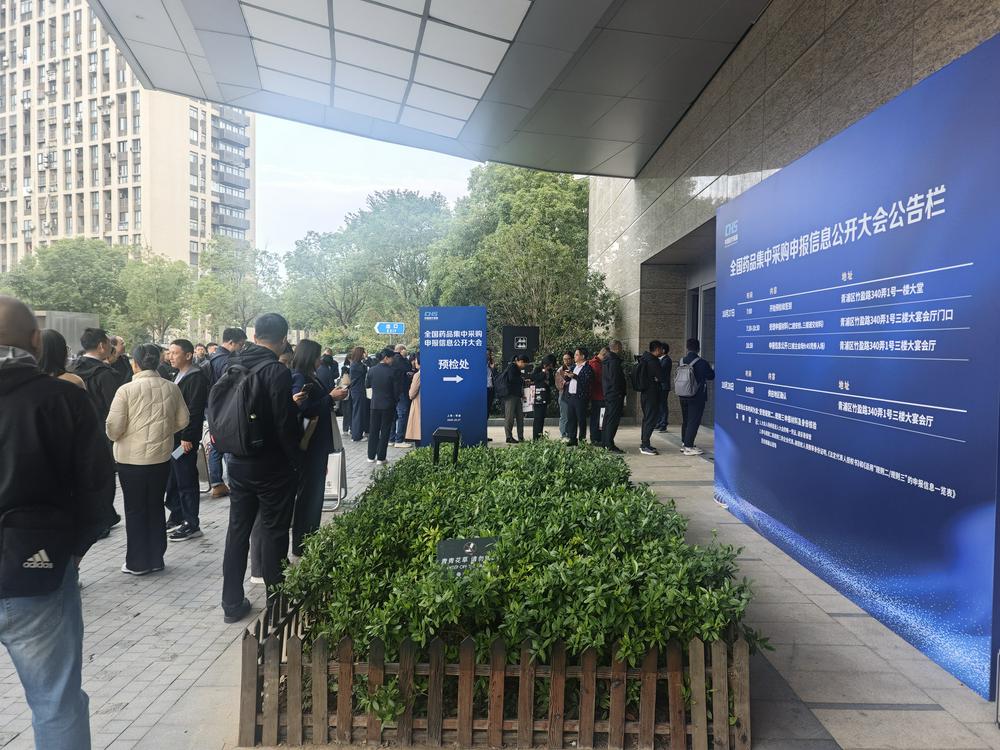
Comprehensive Optimization of Rules! The 11th Batch of National Procurement Opens Bidding Today, Involving 55 Varieties and Over 400 Companies Competing
China’s prepared food standard open for consultation: No preservatives, max 1-year shelf life

PBOC Sets Out Its Exchange Rate Policy Stance: Where Does the RMB Go From Here?