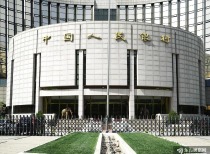
PBOC to Conduct Overnight Reverse Repo Operations from September 28 to October 8, Raising Daily Cap to 1 Trillion Yuan
The People's Bank of China (PBOC) is tending to cross-holiday funding needs.On September 23, the PBOC said in an open market operations announcement that, to better match the banking system's short-te
The People's Bank of China (PBOC) is tending to cross-holiday funding needs.
On September 23, the PBOC said in an open market operations announcement that, to better match the banking system's short-term liquidity needs, it will conduct overnight reverse repo operations from September 28 to October 8, using fixed-rate, quantity tenders, with daily operations capped at 1 trillion yuan.
To further improve its interest rate regulation mechanism and enrich the tenor varieties of its policy tools, the central bank added overnight reverse repo operations in June to better match financial institutions' short-term liquidity needs, and conducted the first such operation at the end of June.
The PBOC noted that overnight transactions now account for more than 90% of repo trading in the money market in recent years, making overnight funding a key tool for institutional liquidity management. Around month-ends and tax payment periods, some institutions may need short-term liquidity for only two or three days; choosing overnight operations at these junctures can improve liquidity management efficiency and reduce costs for financial institutions.
Higher Daily Cap Ahead of the National Day Holiday
Notably, the daily cap has been raised from 600 billion yuan in previous rounds to 1 trillion yuan. Market observers attribute the increase mainly to elevated demand for overnight reverse repos around the week-long National Day holiday, driven by pre-holiday cash withdrawals by households, month-end bank assessments, and the concentrated maturity of open market operations.
Industry insiders told Cailianshe (CLS) reporters that the central bank's higher daily operation ceiling can fully satisfy financial institutions' short-term funding needs, guide the short-term money market rate DR001 to run smoothly around the policy rate, and more effectively curb its volatility.
Ample Support for Funding Fluctuations Around Holidays and Month-Ends
Dong Ximiao, chief researcher at Merchants Union Consumer Finance, said the overnight reverse repo operation is a routine short-term liquidity management arrangement with an overnight tenor, whose funds are automatically repaid with interest the next day. It does not change the medium- and long-term liquidity of the banking system, but is mainly used to smooth short-end funding volatility during cross-quarter and cross-holiday periods and stabilize short-term rates such as DR001. Compared with the operation from August 27 to September 1, the daily cap was raised from 600 billion yuan to 1 trillion yuan, an increase of about 67%, and the coverage period was extended from 6 days to 11 days, spanning both quarter-end assessments and the National Day holiday, indicating the PBOC has made fuller provision for potential short-term liquidity gaps and arranged operations with more foresight.
Meanwhile, 7-day funds this week can span the Mid-Autumn Festival holiday, so cross-holiday funding demand may continue to rise. Government bond net payments are expected to reach 544.3 billion yuan this week - lower than the previous week's level of over 600 billion yuan but still above historical averages - which will also weigh on the funding market to some extent.
"Overall, this increase is the central bank's proactive adaptation to the peak in short-term liquidity demand at a specific juncture, reflecting a precision-adjustment approach of 'shaving peaks and filling valleys,' rather than a shift in the monetary policy stance," Dong said.
Faster Monetary Policy Transition
Since the end of June, overnight reverse repo operations have been gradually normalized, and the operation methods are being refined. Wang Qing of Golden Credit Rating expects the PBOC may further increase the frequency of overnight reverse repo operations, gradually replacing the 7-day reverse repo as the core policy tool for short-term liquidity adjustment; this would also pave the way for the overnight reverse repo rate to replace the 7-day reverse repo rate as the main policy rate.
Recently, PBOC Governor Pan Gongsheng noted in a signed article that the central bank will continue to advance the transformation of its monetary policy framework and build a sound, science-based monetary policy system. It will keep optimizing intermediate variables, downplaying the focus on quantitative targets - especially on the single channel of bank loans - and treating aggregate financing more as an observational, reference and expectations indicator. The bank will place greater emphasis on price-based regulation and improve the market-based formation, regulation and transmission of interest rates, while refining the short-end rate regulation mechanism, optimizing the policy rate framework and supporting institutions, and strengthening the role of the central bank's policy rate.
"It should be noted that the central bank is accelerating the transition of its monetary policy framework toward price-based regulation, but the policy tone of maintaining ample liquidity remains unchanged. Going forward, short-term money market rates will run 'steadier,' and rate levels will follow adjustments in the policy rate. Short-term factors such as tax payments, government bond issuance proceeds, policy tool maturities, pre-holiday cash withdrawals and month-end bank assessments will have a diminishing impact on funding conditions," Wang said.
The market expects that, under the central bank's precise fine-tuning, funding conditions will transition smoothly into the holiday period.
Related Articles

Pan Gongsheng, Li Yunze, Wu Qing, and Zhu Hesheng Speak Out on the Same Day, Sending a Strong Signal

Exchange Losses Plus a 20% Tax? Hong Kong Insurance Tax Rumors Rattle Investors with Trillions in Offshore Policies at Stake

Renminbi Indexes Rise Last Week as Internationalization Supports Exchange Rate

China Assets See 'Stock-FX Resonance' Again, Foreign Net Inflows Hit $13.1B YTD

PBOC's 7-Day Reverse Repo at Zero for Seven Straight Sessions: What Signal Is Being Sent?