China's Forex Reserves Inch Up at End-July; Central Bank Continues Gold Accumulation
According to the latest statistics released by the State Administration of Foreign Exchange (SAFE) on August 7, China's foreign exchange reserves stood at US$3.4188 trillion at the end of July 2026, u
According to the latest statistics released by the State Administration of Foreign Exchange (SAFE) on August 7, China's foreign exchange reserves stood at US$3.4188 trillion at the end of July 2026, up US$2.5 billion from the end of June, an increase of 0.07%.
Over the past month, the U.S. dollar index declined and global equity markets remained volatile. Driven by the combined effects of exchange rate conversion and asset price changes, China's foreign exchange reserve scale rose modestly month-on-month, holding above the US$3.4 trillion level for four consecutive months.
Exchange rate movements were the main driver of the increase in foreign exchange reserves in July. The U.S. dollar index fell approximately 1.3% month-on-month in July, while non-USD currencies broadly strengthened, lifting the dollar-denominated value of foreign exchange reserves.
Changes in financial asset prices partially weighed on the reserve scale. Market expectations of a Federal Reserve rate hike in September intensified in July, and with rising international oil prices fueling global inflation concerns, the 10-year U.S. Treasury yield surged 31 basis points over the month, while global bond prices broadly declined. On the equity front, the previously strong global tech sector saw a concentrated correction, with global equity markets broadly volatile and weaker. Combined declines in bond and equity valuations reduced the valuation of some of China's foreign exchange reserve assets.
"On balance, the exchange-rate conversion effect from the July dollar index decline slightly outweighed the impact of lower global financial asset prices, pushing China's foreign exchange reserve scale modestly higher," said Wang Qing, chief macro analyst at China Golden Credit Rating International, in an interview with the Securities Times.
Stable overall national economic performance provides a foundation for maintaining basic stability in the foreign exchange reserve scale. "The global manufacturing upcycle driven by AI investment continues, and exports are expected to maintain strong growth. Meanwhile, as China continues to improve cross-border investment and financing facilitation, the net inflow of cross-border capital is expected to continue," said Wen Bin, chief economist at China Minsheng Bank. SAFE also stressed that China's economy is showing new drivers of growth, an improving structure, and strong resilience and vitality—conditions that are conducive to maintaining basic stability in the foreign exchange reserve scale.
Data shows that at the end of July 2026, official gold reserves stood at 76.08 million ounces, up 640,000 ounces from the previous month. The People's Bank of China has now increased its gold holdings for 21 consecutive months, providing an important anchor for the steady operation of the country's foreign exchange reserves.
Related Articles

CSRC and Seven Agencies Launch Joint Crackdown on Illegal Cross-Border Securities and Forex Activities

MOFCOM Responds to Progress in China-US Economic and Trade Consultations and Other Hot Topics

Onshore Yuan Closes at 6.7817 Against Dollar, Down 33 Pips

China's Cross-Border Capital Inflows Reach $62.4 Billion in August as SAFE Says Forex Market Operating Steadily
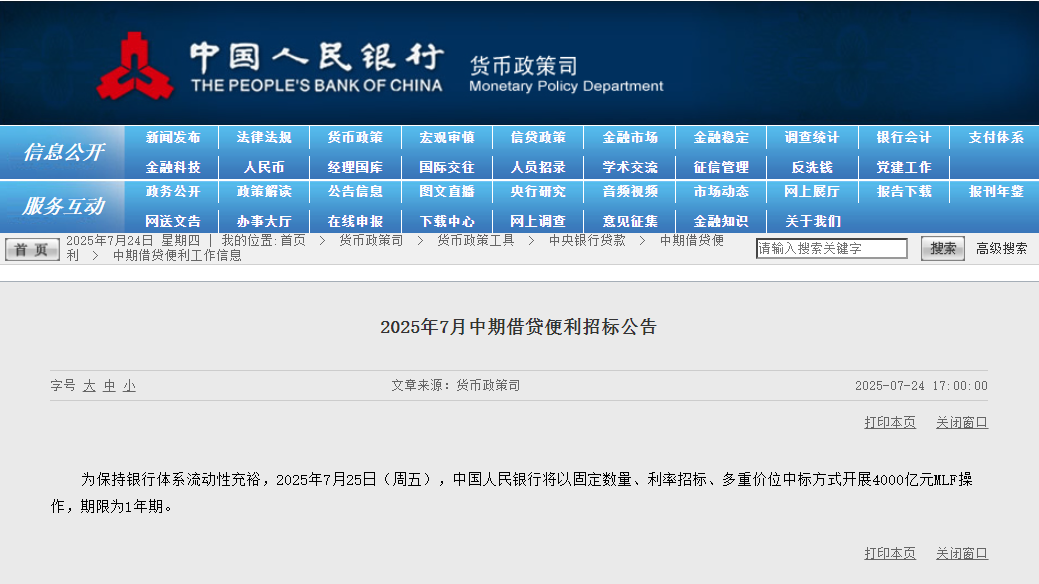
The central bank will conduct 400 billion yuan in Medium-term Lending Facility (MLF) operations on July 25