Hong Kong RMB Clearing Volume Hits Record 53.2 Trillion Yuan as Offshore Market Capabilities Expand Rapidly
Hong Kong's offshore RMB market is undergoing significant transformation. Data shows that Hong Kong's RMB clearing volume surged to a record 53.2 trillion yuan in June, surpassing both HKD and USD set
Hong Kong's offshore RMB market is undergoing significant transformation. Data shows that Hong Kong's RMB clearing volume surged to a record 53.2 trillion yuan in June, surpassing both HKD and USD settlement volumes for the first time. Additionally, offshore RMB deposits in Hong Kong reached an all-time high of 1.13 trillion yuan at the end of May, while RMB bond issuance grew 33% year-on-year.
Multiple experts interviewed believe that the simultaneous growth in clearing volume, deposits, and bond issuance signals that Hong Kong's offshore RMB market functions are expanding beyond trade settlement into financing, investment, and asset allocation. RMB internationalization is also progressing from "expanding usage scenarios" toward "enhancing financial capabilities."
Recently, several indicators of Hong Kong's offshore RMB market have strengthened notably. Ming Ming, Chief Economist at CITIC Securities, told Shanghai Securities News that the surge in RMB settlement volume, offshore deposits, and bond issuance demonstrates that both the depth and breadth of Hong Kong's offshore RMB market are continuously improving. It also indicates that the "deposit–financing–investment–recirculation" chain for offshore RMB liquidity is taking shape and steadily maturing.
Qian Yilei, Lecturer at the School of Finance and Management of Shanghai University of International Business and Economics, noted that RMB clearing volume exceeding HKD and USD reflects the increasing frequency of RMB usage in cross-border trade, financial transactions, and asset allocation. This not only represents growth in transaction scale but also signals the expanding functionality of Hong Kong's offshore RMB market.
"In the past, the offshore RMB market primarily served trade settlement. Now it is extending toward more comprehensive financial functions including financing, investment, and risk management, with the offshore RMB ecosystem steadily improving," Qian said.
Dong Yaohui, Rotating Dean of the Shenzhen Financial Stability and Development Research Institute, stated that while single-month clearing volumes can be influenced by large institutional transactions, bond issuances, and corporate fund transfers, the synchronized growth across multiple indicators already reflects the expanding scope of Hong Kong's offshore RMB market, with increasing demand for RMB financing, investment, and risk management beyond settlement.
The warming of Hong Kong's offshore RMB market is driven by both trade settlement demand and financing and investment needs. Ming Ming believes that China's sustained high export momentum, coupled with the accelerating overseas expansion of Chinese enterprises, has established a long-term stable foundation for offshore RMB deposits through trade settlement demand. Meanwhile, relatively low RMB financing rates and growing domestic investor demand for overseas asset allocation are driving rapid growth in RMB bond issuance in Hong Kong.
"The expanding scenarios for cross-border RMB usage are an important driving force," Qian Yilei said. As China's economic and trade ties with the world deepen, enterprises are increasingly using RMB in trade settlement and investment cooperation. At the same time, some economies are diversifying their international payment and reserve assets, creating new space for RMB usage.
The strengthening of RMB's financing function is also a key factor. Qian noted that dim sum bonds and other RMB financing instruments provide new funding channels for both domestic and overseas issuers, while RMB assets are becoming an important choice for international investors' asset allocation. Mechanisms such as Bond Connect, Swap Connect, and Cross-boundary Wealth Management Connect enhance the convenience for overseas investors to participate in the RMB market, enabling RMB funds to "stay, be utilized, and be invested."
Extending the observation to structural changes reveals deeper logic. He Zhiren, Researcher at the International Economic and Trade Innovation and Governance Research Institute of Shanghai University of International Business and Economics, stated that recent changes in Hong Kong's offshore RMB market result from the combined effects of cyclical and structural factors: on one hand, low interest rates, exchange rate movements, and mainland import-export growth have boosted RMB financing, deposit, and settlement demand; on the other hand, the rising international influence, competitiveness, and pricing power of Chinese "going global" enterprises represent longer-term structural factors favorable to Hong Kong's RMB market.
He cited examples such as numerous enterprises deeply engaged in Belt and Road partner countries increasingly denominating cross-border trade and investment contracts in RMB, with related clearing, financing, and hedging demands concentrated in Hong Kong. "This demand is structural and reflects the improvement of China's position in global industrial and supply chains," He said.
Related Articles
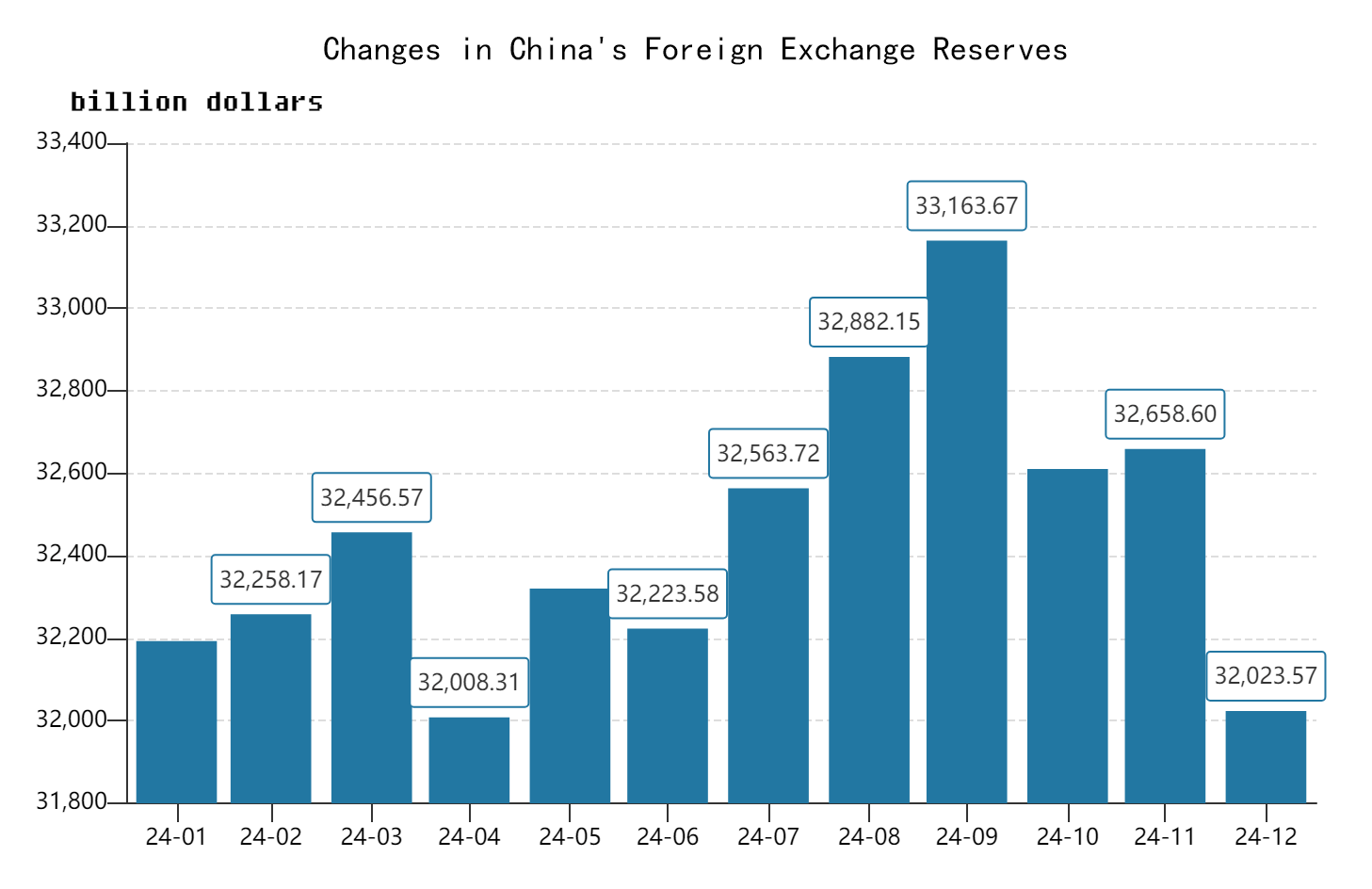
China's foreign exchange reserves stood at $3.2 trillion in 2024, equivalent to RMB 23 trillion.
PBoC to Conduct 600 Billion Yuan MLF Operation on May 25, Net Injection This Month

People's Daily: Resolutely Defend the Victorious Achievements of Taiwan's Liberation and Return to the Motherland

Big Chip News! China Achieves New Breakthrough in Photoresist Technology! How Significant Is This?