PBoC Releases Q1 Monetary Policy Report: Continues to Implement Moderately Loose Monetary Policy
This year, under the strong leadership of the Central Committee of the Communist Party of China with Comrade Xi Jinping at its core, the national economy has made a strong start, with major indicators
This year, under the strong leadership of the Central Committee of the Communist Party of China with Comrade Xi Jinping at its core, the national economy has made a strong start, with major indicators performing better than expected, demonstrating strong resilience and vitality. Gross Domestic Product (GDP) grew by 5% year-on-year in the first quarter. The People's Bank of China (PBoC), guided by Xi Jinping Thought on Socialism with Chinese Characteristics for a New Era, resolutely implements the decisions and deployments of the Party Central Committee and the State Council, continues to implement a moderately loose monetary policy, leverages the synergistic effects of existing and incremental policies, and strengthens counter-cyclical and cross-cyclical adjustments to create an appropriate monetary and financial environment for sustained economic improvement.
First, maintain accommodative social financing conditions and ensure reasonable growth in financial aggregates. Comprehensively utilize various monetary policy tools such as reverse repos, Medium-term Lending Facilities (MLF), and Treasury bond trading operations to maintain ample liquidity. Guide financial institutions to make balanced credit allocations and fully meet the effective credit demand of the real economy. Second, promote the operation of comprehensive social financing costs at a low level. Reduce the interest rate of structural monetary policy tools by 0.25 percentage points, continuously unleash the effectiveness of the Loan Prime Rate (LPR) reform, and effectively leverage the market-oriented deposit rate adjustment mechanism. Third, guide financial institutions to optimize the orientation of credit fund allocation. Improve and increase support for structural monetary policy tools to further assist in economic structural transformation and optimization. Merge and utilize re-lending and re-discount quotas for agriculture, rural areas, and small businesses, increase the quota by 500 billion yuan, and separately allocate 1 trillion yuan in re-lending for private enterprises. Increase the quota for scientific and technological innovation and technological transformation re-lending by 400 billion yuan, and include small and medium-sized private enterprises with high R&D investment levels into the supported areas. Jointly establish a risk-sharing tool for technology innovation and private enterprise bonds. Expand the support areas of the carbon emission reduction support tool, service consumption, and pension re-lending. Fourth, maintain basic stability of the exchange rate. Adhere to the decisive role of the market in exchange rate formation, give full play to the adjustment function of the exchange rate on macroeconomics and the balance of payments, implement comprehensive measures, and maintain the RMB exchange rate basically stable at a reasonable and均衡 level. Encourage financial institutions to improve their exchange rate risk management service levels. Fifth, orderly resolve key areas of financial risk. Continuously improve macro-prudential management and the financial stability guarantee system. Steadily advance the disposal of financial risks in key institutions and key regions.
The effects of the moderately loose monetary policy continue to manifest. Financial aggregates are growing reasonably, with the stock of social financing and the broad money supply (M2) increasing by 7.9% and 8.5% year-on-year respectively at the end of March, indicating relatively accommodative social financing conditions. Comprehensive social financing costs are at a historically low level, with newly issued corporate loan rates and individual housing loan rates both around 3.1% in March. The credit structure continues to optimize, with loans to technology, green loans, inclusive loans, pension industry loans, and digital economy industry loans increasing by 13.7%, ... [truncated]
Related Articles
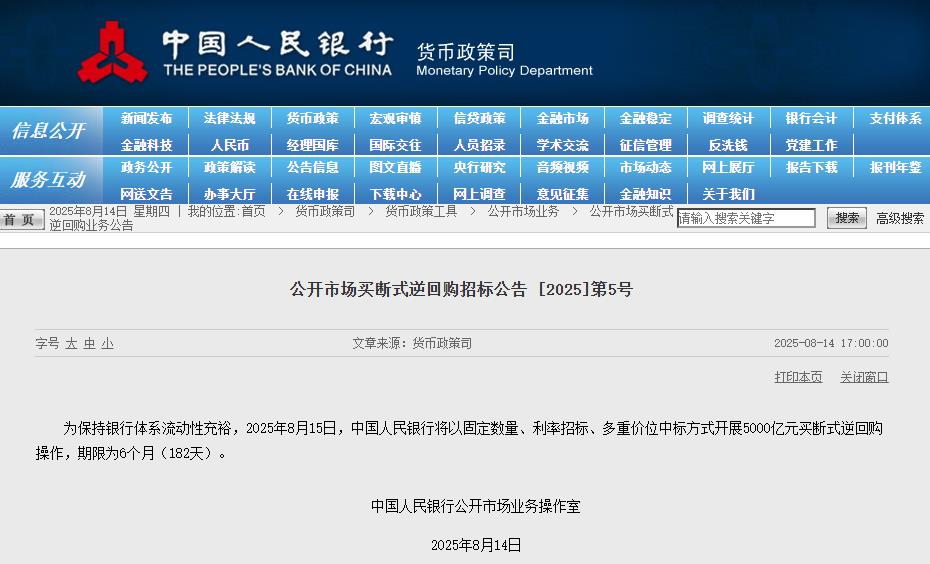
The central bank will conduct 500 billion yuan in outright reverse repurchase operations on August 15
Renminbi loans increased by 12.87 trillion yuan in the first seven months M2 balance at end of July rose 8.8% year-on-year
State Administration of Foreign Exchange: Foreign investors net purchased $10.1 billion worth of domestic stocks and funds in the first half of the year
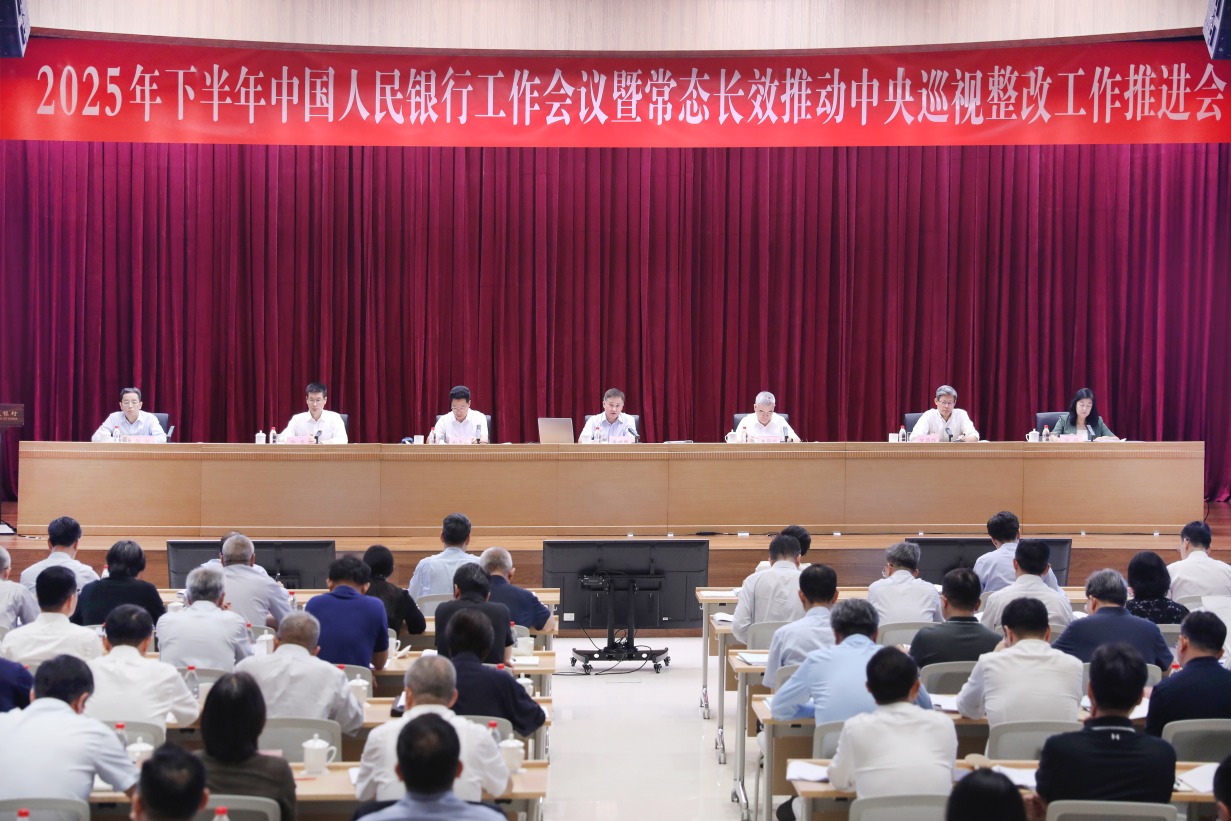
The central bank: Continue to implement an appropriately accommodative monetary policy

SAFE Guangdong Branch: Cross-Border Trade Facilitation Policies Boost Guangdong's Modern Services Sector